Get Full Government Meeting Transcripts, Videos, & Alerts Forever!
Get email alerts on the Wrongful Conviction Compensation topic
No spam. Unsubscribe anytime.
Committee approves $1.6 million compensation resolution for man exonerated after 23 years
Summary
The Appropriations Committee voted to pass House Resolution 130, recommending $1,600,000 in compensation for Cedric Moore, who was exonerated by new DNA testing after serving about 23 years for a sexual assault he was later found not to have committed.
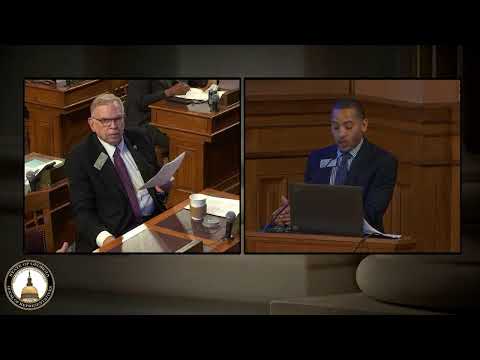
Representative Crawford presented House Resolution 130 on behalf of Cedric Moore, saying Moore was wrongfully accused and spent about 23 years incarcerated for a crime that later DNA testing showed he did not commit. "Mr. Moore was wrongfully accused... and he spent 23 years in jail for a crime that he never committed," Crawford told the committee.
Crawford described the facts the sponsor said he had reviewed: at the time of the 1993 case, the victim could not identify Moore and one of the actual perpetrators implicated Moore; inconsistent testimony and limited DNA methods used then contributed to the conviction, Crawford said. Advances in DNA testing later produced a non-match and the court vacated the conviction, resulting in Moore’s exoneration, Crawford said.
Members asked questions about prior arrests, the victim’s identification, prior compensation for a co-defendant and how the $1,600,000 figure was calculated. Crawford said the amount on page three of the resolution reflects an approximate calculation of 23 years at about $75,000 per year, with adjustments for fees and costs; committee members noted a previous co-defendant, Mr. Robinson, had received compensation earlier.
Several members said they regretted the committee’s repeated need to consider wrongful-conviction compensation and urged improvements to procedures that could reduce such cases in future. After discussion, a committee member moved to pass HR 130; the committee approved the resolution by voice vote.
The resolution is a committee recommendation for compensation. A subsequent legislative process is required to enact payment authority or statutory compensation; members discussed the broader policy context for wrongful-conviction compensation and mentioned ongoing legislative efforts to create a standard process for such cases.