Get Full Government Meeting Transcripts, Videos, & Alerts Forever!
Get email alerts on the Real Estate topic
No spam. Unsubscribe anytime.
Real-estate 'wholesaling' draws scrutiny at General Law hearing; advocates and practitioners seek licensing, disclosures
Summary
Lawmakers questioned real-estate wholesalers at a General Law hearing as advocates sought mandatory seller disclosures, rescission rights and licensing to protect vulnerable property owners.
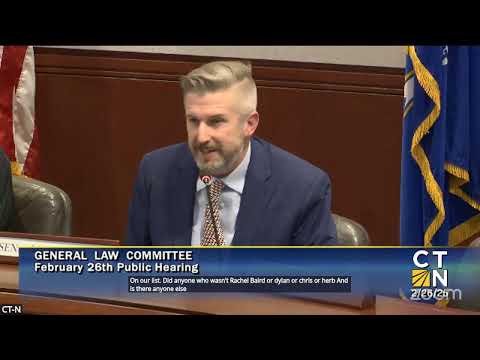
The General Law Committee heard testimony on legislation that would require licensing and increased disclosures for real-estate wholesalers — intermediaries who commonly place distressed or off‑market property under contract and then assign those contracts to third‑party buyers.
Representative Joe Zullo, who testified for the bill's proponents, described wholesaling as a growing niche that often involves sellers who are vulnerable, in financial distress or pressed for time. "Wholesalers often deal with people who are vulnerable, and there's often an asymmetry of bargaining power, information, and comfort in a real estate process that makes them more susceptible to being exploited," Zullo told the committee.
Supporters of licensing urged three core protections: (1) a required statutorily‑mandated disclosure form delivered to sellers that explains the wholesaler's intent to assign the contract and the possibility of a profit to the wholesaler; (2) a clear statement of termination rights and any deposits paid; and (3) civil penalties and the ability for sellers to rescind assignments under limited circumstances. The Connecticut Association of Realtors said it supported a disclosure-driven approach and offered detailed draft language requiring a "notice to sellers in a wholesale transaction." The association also urged strong penalties for failure to disclose. "Our draft bill would require the wholesaler must share with the seller that they are not purchasing the home themselves but intend to sell or assign the contract to another buyer," testified Carl Landes of the association.
Industry witnesses urged caution. Several investors and operators described organized, transparent wholesaling businesses that provide cash options to sellers who need rapid transactions or cannot easily prepare a home for public sale. They argued that standardized disclosures and licensing could protect consumers without shutting the marketplace down and noted many transactions are handled by licensed agents and attorneys. "At first glance that doesn't sound like it's so bad," said Adam Devine, a local managing broker. "But unfortunately, in my line of business, I've come across deals and scenarios that... represent situations that have come up that will continue to come up if we don't regulate, if we don't license, we don't stop these bad actors." (Joe Zullo, opposing quote)
The panel discussed possible time limits on assignments, required deposit amounts, and whether the State Department of Consumer Protection should regulate wholesalers like other construction and trade professions. Several legislators asked the State Board of Accountancy and legal stakeholders to provide sample disclosure language and consider whether licensing should be handled by an existing board or by DCP.
Next steps: Committee members asked for an interparty working session with realtors, wholesalers, consumer advocates and DCP staff to draft agreed disclosure language and explore licensing options that would protect sellers without unnecessarily limiting legitimate business models.
Background: Wholesaling has increased in visibility as investors use off‑market purchase agreements and assignment techniques; proponents say it offers a useful alternative for sellers needing speed and certainty, while critics warn of potential exploitation when sellers are financially vulnerable.