Get Full Government Meeting Transcripts, Videos, & Alerts Forever!
Get email alerts on the Artificial Intelligence topic
No spam. Unsubscribe anytime.
Connecticut lawmakers weigh broad AI bill as agencies, businesses and labor press competing priorities
Summary
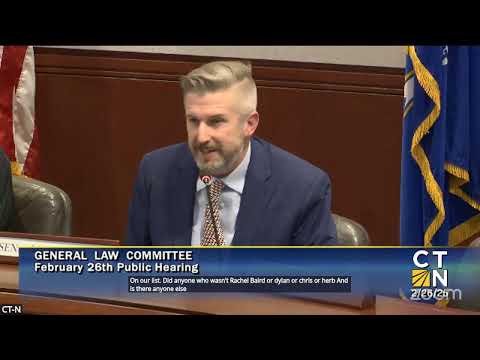
Lawmakers and witnesses at the General Law Committee public hearing debated a comprehensive artificial intelligence proposal — Senate Bill 2 — that pairs state-funded job training and innovation programs with new regulatory requirements for AI systems.
Lawmakers and witnesses at the General Law Committee public hearing debated a comprehensive artificial intelligence proposal — Senate Bill 2 — that pairs state-funded job training and innovation programs with new regulatory requirements for AI systems. The proposal drew support for its workforce and sandbox provisions and sharp concern about regulatory burdens on developers and deployers.
Advocates and agency officials praised the bill's economic-development components and efforts to build a local AI workforce. "AI represents a new wave of innovation that has the potential to dramatically increase human productivity and accelerate economic growth," Commissioner Dan O'Keefe of the Department of Economic and Community Development told the committee, urging that Connecticut pair investments with safeguards rather than a patchwork of state rules.
But testimony split over the bill's sections that would impose duties on companies to test, disclose and report on high-risk AI systems. Labor and civil-society witnesses pushed for stronger transparency, private enforcement and protections for workers and consumers. "Money shouldn't be the sole motivator when it comes at the expense of consumers and workers alike," Ed Hawthorne, president of the Connecticut AFL-CIO, said, urging mandatory worker involvement and stronger accountability.
Industry groups and business witnesses warned of unintended consequences. Several speakers said the compliance obligations — including required impact assessments, disclosures of training data and periodic reporting — could be costly and hard to operationalize, particularly for small and medium-sized firms. "Compliance with the new regulations proposed by this bill would cost innovative companies substantial amounts of time and resources," Commissioner O'Keefe said, warning the state could deter investment if it moved too far ahead of regional peers.
Other witnesses urged a narrower, risk-based approach. Some urged focusing regulation on deployers — the organizations that actually make consequential decisions about people — and relying on existing civil-rights and consumer-protection laws to address harms. Others recommended more detailed, practical guidance and templates for smaller companies so they could meet requirements without hiring expensive consultants.
Committee members noted the tension between acting early to prevent harms and imposing rules that could stifle growth. Several lawmakers said they wanted to preserve the bill's workforce and sandbox provisions while tightening legal definitions and exemptions so compliance would be achievable for smaller firms.
What happens next: Legislators said they would use the hearing testimony to refine definitions (for example, what constitutes a "consequential decision" or a "high-risk" system), narrow or clarify developer versus deployer duties, and consider additional support and phased implementation for small businesses. No formal votes were taken at the hearing.
For readers: Senate Bill 2 proposes both regulatory duties (testing, documentation, public disclosures and reporting for certain AI systems) and nonregulatory investments (an AI academy, sandbox programs, workforce grants). Committee debates centered on whether the regulatory pieces are appropriately targeted and how to avoid a patchwork of state-by-state rules that could disadvantage Connecticut employers and startups.