Get Full Government Meeting Transcripts, Videos, & Alerts Forever!
Get email alerts on the Mandated Reporter Training topic
No spam. Unsubscribe anytime.
Bill would standardize training for mandated reporters in Minnesota
Summary
Rep. Jim Nash introduced House File 13-46 to require more detailed, standardized training for mandated reporters; advocates and state staff described gaps in current training and clarified the bill would require offering improved training, not mandate completion.
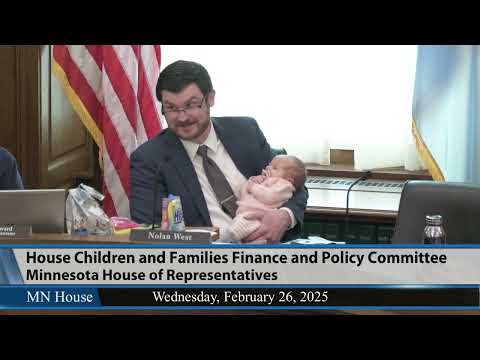
Representative Jim Nash, the sponsor of House File 13-46, told the Children and Families Committee he introduced the bill to standardize and expand training for mandated reporters across Minnesota.
The bill aims to increase the detail and uniformity of training for people required by law to report suspected child maltreatment. “This bill seeks to bring a higher level of detail to the training, provide a greater level of standardization,” Representative Jim Nash said during his introduction. Nash framed the bill as bipartisan and personally important to him.
Why it matters: Committee testimony and state staff told lawmakers that current training materials allocate only a small portion of time to recognizing maltreatment and that some guidance conflicts with state law. Melissa Debilzin, executive director of Safe Passage for Children of Minnesota, said state data show child abuse is an ongoing problem and training gaps persist. “Of the 45 minute training, only two–three minutes were dedicated to recognizing signs of maltreatment,” Debilzin said, adding that training materials sometimes misstated legal standards (for example, advising reporters they must be certain of abuse rather than have "reason to believe"). She urged the committee to require that at least half of any mandated-reporter training focus on recognizing signs of maltreatment and that trainings be informed by subject-matter experts such as child abuse pediatricians, attorneys and social workers.
During member questions, Representative Hicks asked whether the bill would still cover suspected abuse in addition to “maltreatment.” Debilzin and Representative Nash clarified the bill’s language is intended to cover suspected abuse and neglect (i.e., suspected maltreatment). Committee staff from the Department of Children, Youth and Families (DCYF) — identified in committee as Ms. Sunderman — clarified the bill requires that training be offered and sets content standards; it does not at this stage compel every mandated reporter to take the training. “This section does not require mandated reporters to complete or undergo training,” Ms. Sunderman said; it requires training to be offered and typically organizations decide whether to require it for employees.
Action: Representative Nash moved that House File 13-46 be re-referred to the Human Services Committee. The committee approved the motion by voice vote; members present said “aye” and the minutes record that “the motion prevails and the minutes are adopted,” with no roll-call tally provided.
Clarifying details provided in testimony include: 2022 state data showing about 5,000 children were confirmed victims of abuse and 21 child fatalities; nearly 80,000 reports of potential maltreatment statewide in 2022, with about 80% originating from mandated reporters; and a current training length of roughly 45 minutes, with only two–to–three minutes focused on recognizing signs of maltreatment, per the testifier.
Next steps: The bill was referred to the Human Services Committee for further consideration. Committee members expressed bipartisan support and several said they were open to future changes, including possibly requiring completion of training by mandated reporters at a later stage.