Get Full Government Meeting Transcripts, Videos, & Alerts Forever!
Get email alerts on the Waste Disposal Fire Debris topic
No spam. Unsubscribe anytime.
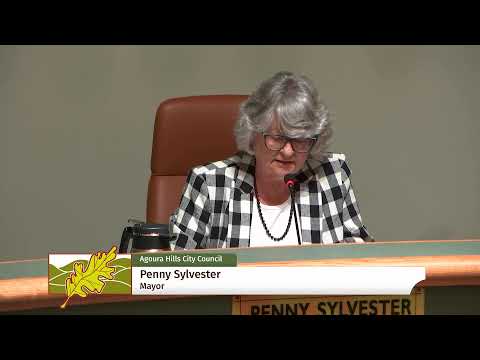
Agoura Hills officials outline testing, transport and monitoring for Palisades fire debris bound for Calabasas Landfill
Summary
Mayor Sylvester and city staff described how ash and the top six inches of soil from Palisades fire sites are being tested, wrapped, transported and monitored before deposit at the Calabasas Landfill and summarized which materials will not come to that facility.
Mayor Sylvester told the Agoura Hills City Council on March 4 that contaminated materials from the Palisades wildfires are being handled in multiple phases and that the ash and top six inches of soil — not hazardous wastes — are planned for the Calabasas Landfill. "It is not the hazard hazardous toxic debris… What is coming to the Calabasas Landfill is the ash debris and the top 6 inches of soil," Sylvester said, summarizing information collected from state and federal agencies.
The update gave residents a run-through of how the debris removal is being staged: hazardous materials were removed in an initial phase and routed to other landfills; remaining ash and shallow soils are being tested at burn sites and, where asbestos or regulated hazardous materials are found, removed and sent to specialized handling. Sylvester said the U.S. Army Corps of Engineers and other agencies wrap contaminated material in government-regulated plastic, load it into dedicated trucks and wet ash before transport to reduce airborne dust.
Why it matters: Agoura Hills residents have expressed concern about what will arrive at local landfills and whether monitoring and transport safeguards are adequate. Sylvester emphasized multi-agency monitoring and long-term oversight, noting reporting and inspection by the South Coast Air Quality Management District and the Los Angeles Regional Water Quality Control Board and ongoing monitoring by Los Angeles County Public Health.
Details from the city: Sylvester said Calabasas Landfill has accepted residential fire debris under permit since 1980 and that newer lined cells ("bins") are designed with leachate and gas collection systems. She said trucks will use the most direct municipal routes, operate up to six days a week to shorten the timeline, and inspected loads will be sprayed down and covered daily with 12 inches of soil. Sylvester also said that phase‑1 hazardous waste removal is complete and that sites are tested for asbestos before ash and soil are moved; material found to contain asbestos will not go to Calabasas.
Public questions and comments at the meeting focused on testing frequency and transport transparency. Local resident Richard Lawson said navigating multiple agencies’ public reports is difficult and urged a single public portal. "It is it is a spider web. It's very, very hard to find anything," Lawson said, asking the city to seek a one-stop source for monitoring information. Sylvester said the city has asked the Los Angeles County Department of Public Health to serve as a central point of contact and would continue to press for clear public reporting and route transparency.
What the city says it will do next: Sylvester said she and staff have been participating in multi-agency town halls and that the city sent a February 15 letter to the U.S. Army Corps of Engineers requesting more information. She reiterated that state, regional and county agencies have committed to proactive air and groundwater monitoring during operations and for decades after landfill closure.
Limitations: The council’s update clarified processes and monitoring commitments but did not adopt new policy or make formal decisions; many operational details (exact transport routes day-to-day and some testing protocols) are controlled by state and county agencies and Caltrans for routing. Sylvester cautioned that route selection is often done on a day‑to‑day basis to account for traffic and safety, and that public maps of routes may therefore be posted or changed by Caltrans or other implementing agencies.
Forward look: The mayor and staff said they will continue to advocate for consolidated public reporting, more visible route information where feasible, and continued multi-agency air and water monitoring. Residents were encouraged to look for agency reports and direct questions to the county public health office, the city said.