Get Full Government Meeting Transcripts, Videos, & Alerts Forever!
Get email alerts on the Solid Waste topic
No spam. Unsubscribe anytime.
Bill would expand electronics recycling and fund safety upgrades after spike in battery-related fires at collection sites
Summary
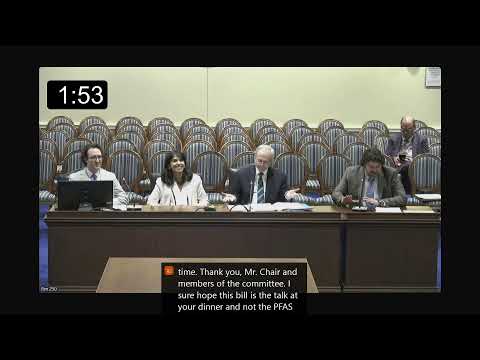
House Bill 931 would create a point-of-sale recycling fund for electronic devices to reimburse local governments for collection and to pay for fire-detection/suppression equipment at drop-off sites; counties and recycling groups backed the change while some retailers raised concerns about compliance costs and program governance.
House Bill 931 would replace the current manufacturer-fee-funded electronics recycling framework with a point-of-sale funding model and broaden program responsibilities to include collection, refurbishment, materials recovery and safety upgrades for collection sites.
Delegate Stein told the committee that Maryland’s earlier electronics law (2005) was no longer adequately funded and that the number of household electronic devices collected for recycling had fallen sharply. Testimony from recycling program managers confirmed a drop from roughly 19 million pounds statewide previously to under 6 million pounds in recent years as collection programs contracted because of costs.
Supporters, including the Maryland Recycling Network, SWANA, the Maryland Association of Counties and multiple county recycling coordinators, called the bill a “shared responsibility” model that would remove the financial burden from local taxpayers and provide funding to buy detection, monitoring and suppression systems to reduce lithium-ion battery fires at collection points and in collection trucks. Maryland county officials said battery fires are increasing and have imperiled material-recovery facilities and curbside trucks; Howard County and Baltimore County officials gave repeated examples of fires and the program costs they have borne.
The bill exempts refurbished/resale purchases from the fee to encourage reuse. It also includes an administrative framework assigning program oversight to MDE with an option to delegate administration to a third-party administrator through procurement; that option matches models used for paint and tire stewardship programs.
Retail and trade groups raised concerns that the program would add a fee at point of sale and flagged administrative/oversight details and online sales compliance. The Maryland Retailers Alliance urged caution about additional consumer costs and asked for safeguards (audits, transparency) for third-party program administrators.
Safety advocates urged inclusion of standards and certifications for electronics recyclers (for example, e-Stewards) to avoid export or unsafe processing practices. Witnesses urged the committee to require certification or equivalent standards for contractors handling collected electronics.
No committee vote was recorded. Several speakers and sponsors said they would work on clarifying program administration and standards for recycler participation.
(Reporting note: testimony paraphrases speakers; direct quotes are attributed where indicated in the transcript.)