Get Full Government Meeting Transcripts, Videos, & Alerts Forever!
Get email alerts on the Waste Management topic
No spam. Unsubscribe anytime.
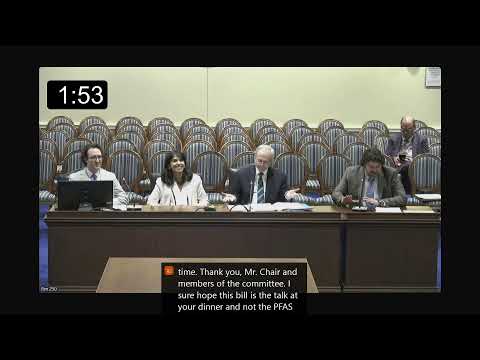
Maryland hearing splits on proposed ban on chemical 'advanced' recycling of plastics
Summary
House Bill 1092 would prohibit construction and operation of so-called chemical recycling facilities in Maryland, a step supporters say is needed to prevent toxic emissions and an industry “greenwash,” while opponents say advanced molecular recycling can yield feedstocks and should be regulated rather than banned.
House Bill 1092 would remove chemical conversion processes (commonly marketed as “chemical recycling,” “advanced recycling,” or plastic-to-fuel) from the legal definition of recycling under Maryland law and would prohibit construction and operation of such facilities in the state.
Sponsor testimony focused on public-health and climate concerns. Delegate Taraso described chemical recycling as “a polluting process” that can produce hazardous byproducts and fuels rather than reconstituted plastics. Supporters emphasized documented facility failures and fires in the U.S., uncertain yields, and toxic emissions such as benzene, formaldehyde, dioxins and hydrogen cyanide in pyrolysis and gasification operations.
Local residents whose communities face proposed pilot facilities described health and safety worries. Sharon “Shameka” Preston, a Cedar Creek resident, said the local pilot at her community’s doorstep had been described by firms as “not an incinerator,” but that the Maryland Department of the Environment and EPA designated the pilot plant as a pyrolysis incinerator; she urged a prohibition.
Environmental groups (Clean Water Action, Beyond Plastics, Chesapeake Bay Foundation, Just Zero and others) urged passage, citing low conversion yields to useful plastics, frequent use of the output as fuel, and the industry’s reliance on public incentives. John Barrard of Beyond Plastics said U.S. plants combined currently process well under 1% of national plastic waste and that many facilities never reached commercial operation.
Industry witnesses — including operating chemical recycling firms and large chemical and plastics manufacturers — argued for technology-neutral recycling and said certain molecular recycling processes can return polymer feedstocks for new plastics, reduce reliance on virgin fossil feedstocks, and operate under strict permitting. Several firms said their processes produce substantial liquid yields used as feedstocks and that regulator oversight and permitting make operations safe.
Academic and technical witnesses gave mixed evidence. Several academics and consultants testified that advanced thermal processes can be engineered to produce feedstocks (not fuel) and cited lab-scale work. Opposing academic testimony and environmental advocates pointed to case studies where facilities generated more fuels than polymer feedstocks and to operational fires and regulatory stoppages in Oregon, Nevada and Georgia.
No committee vote was recorded. The hearing captured a fundamental policy choice — whether to prohibit a contentious set of technologies, which some proponents call part of a circular-economy toolbox and opponents call a fossil-fuel boondoggle — or to regulate and permit specific projects under robust emissions and transparency rules.
(Reporting note: testimony paraphrases witnesses; direct quotes are attributed to speakers listed in the transcript.)