Get Full Government Meeting Transcripts, Videos, & Alerts Forever!
Get email alerts on the Public Health topic
No spam. Unsubscribe anytime.
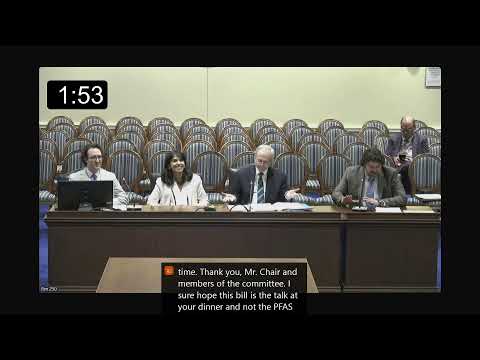
House panel hears bill to fund advanced cancer screening for firefighters
Summary
House Bill 757 would expand and fund a Maryland program providing advanced cancer screening for professional and volunteer firefighters; testimony at the House Environment and Transportation Committee hearing on Feb. 26 focused on firefighter health benefits and a contested funding proposal tied to the state’s oil transfer fee.
House Bill 757 would expand the Professional and Volunteer Firefighter Innovative Cancer Screening Technologies Program and authorize up to $3 million to be allocated through the annual budget to provide advanced, low- or no-cost screenings for Maryland firefighters.
Delegate Nic Kipke (sponsor) told the committee the bill seeks to “allow up to $3,000,000 in the annual budget” and proposed using a portion of the state’s oil transfer fee or raising that fee slightly and directing the increment to the screening fund. He said firefighters have higher cancer incidence and mortality tied to routine occupational exposures, including oil- and petroleum-related incidents.
Chief Robert Phillips, legislative chair of the Maryland State Firefighters Association, said cancer “has taken its toll on both the volunteer and the career service” and recalled recent local losses to cancer among firefighters. Assistant Chief Christopher Truitt of the Salisbury Fire Department said his department used state testing grants to screen roughly 120 of 140 members; 12 members showed elevated risk and were referred for earlier follow-up. “This allowed them to speak with a doctor and begin more in-depth testing and treatment long before they would ever have been symptomatic,” Truitt said.
Supporters framed HB 757 as an access and public-safety measure that helps first responders receive early detection and care. Adam Porter, co-executive director of the University of Maryland Institute for Health Computing, described the program as one that “gives firefighters tools for early cancer detection, ultimately saving lives.”
Opponents, including speakers from the Mid-Atlantic Petroleum Distributors Association, said the bill’s draft funding approach lacks a clear nexus to the existing oil transfer contingency fund and warned of impacts to small, family-owned fuel distributors who currently pay the 9¢-per-barrel transfer fee. Michael Halloran of the Mid-Atlantic Petroleum Distributors Association said many payers of the fee are regional distributors and haulers, not large oil refiners, and said taking the fee “from this particular fund” sets a precedent the industry opposes.
During questions, committee members pressed about the structure of a proposed amendment that would instead increase the barrel fee by a penny or more and dedicate the increment to the screening fund; Delegate Kipke said he had multiple amendment drafts available and wanted the committee’s direction. Delegates also asked whether the statute includes a sunset or look-back to measure effectiveness; Kipke and panelists said data on program participants and outcomes exist and could be used to evaluate impact.
No formal vote was recorded in the hearing. The committee took testimony from firefighter leaders, county representatives and industry groups and indicated the bill may be amended to change the proposed funding mechanism.
What’s next: The sponsor said he would provide amendment language to the committee that could increase the per-barrel fee and direct the incremental revenue to the cancer screening fund, pending committee input. The committee did not announce a final disposition in the hearing.
(Reporting note: quotes and speaker attributions above are drawn from the committee hearing transcript.)