Get Full Government Meeting Transcripts, Videos, & Alerts Forever!
Get email alerts on the Wildfire Mitigation topic
No spam. Unsubscribe anytime.
Senate committee advances wildfire-mitigation bill that narrows utility liability, adds planning requirements
Summary
The Wyoming Senate Committee of the Whole advanced House Bill 192 after debate and amendments that require utilities to file wildfire mitigation plans with the Public Service Commission and limit certain wildfire-related damages against utilities while preserving some landowner remedies.
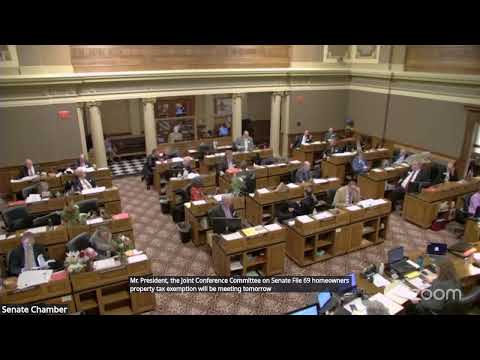
Senator Case, chairman of the Senate Corporations, Elections and Political Subdivisions Committee, led floor debate Wednesday on House Bill 192, a measure that would require electric utilities to file wildfire mitigation plans with the Wyoming Public Service Commission and that would change the civil-liability framework for wildfires linked to utility infrastructure.
The bill requires each electric utility to prepare a wildfire mitigation plan describing its service area, inspection and vegetation-management procedures, upgrades and preventive programs, de-energization procedures and anticipated public-safety impacts, and to seek input from state forestry and local fire entities. It also directs the commission to review and potentially approve plans and allows utilities to seek cost recovery separately if rates are regulated by the commission.
“This bill deals with the liability that arises out of wildfires with respect to utilities,” Senator Case said on the Senate floor as he explained the bill’s origins in interim committee work and a minerals committee task force. “This section requires public utilities to file a mitigation plan with the public service commission and to follow that plan and mitigate the risk of wildfires.”
Why it matters: Sponsors said the measure aims to reduce the costs of wildfire litigation that can threaten utilities’ financial stability and drive higher rates for customers, while requiring utilities to document mitigation steps and report annually on compliance. Opponents warned the bill shifts risk from utilities to private property owners and their insurers unless carefully balanced.
Key provisions and debate
- Plan content and review: HB192 requires mitigation plans to include a mapping of high-risk areas, inspection and vegetation-management schedules, procedures for de-energizing lines and communication plans, and a description of how utilities will restore service after a wildfire. For utilities whose rates are regulated, plans must estimate incremental costs and potential rate impacts. Plans must be updated at least every five years and utilities must file annual reports with the commission requesting a finding of substantial compliance.
- Presumption and limits on damages: The bill creates a rebuttable presumption in civil actions that an approved wildfire mitigation plan is a “reasonable and prudent” preparation for wildfire risks. A plaintiff may recover economic loss only if the plaintiff proves by a preponderance of the evidence that the utility failed to substantially comply with an approved plan and that failure was the proximate cause of the damage. Non-economic damages are generally barred except for injury or death.
- Access, negotiations and defenses: The draft treats a utility as having substantially complied if it attempted in good faith to comply but was denied or unreasonably delayed access to a right-of-way for vegetation management. Debate focused on how to define reasonable efforts by a utility to enforce easement rights and whether the bill appropriately protects landowners whose local ordinances or land-management practices prevent mitigation work.
- De-energization and backfeeding concerns: The bill requires plans to describe procedures and notice protocols for de-energizing power lines to reduce fire risk. Senator Case and other senators discussed the potential hazard of “backfeeding” from on-site generators or rooftop solar during de-energization and the need for utilities to consider those risks when restoring service.
Amendments, votes and floor action
- The committee adopted the standing committee amendment that, among other changes, clarified that utility plans should seek input from counties and required direct notice to Wyoming Association of Conservation Districts, the Wyoming Association of Municipalities and affected counties within five business days after a plan is filed with the commission.
- Two Committee of the Whole amendments were offered on the floor. Committee of the Whole Amendment No. 1 (which would have removed a pre-filing negotiation requirement) failed on a division vote. Committee of the Whole Amendment No. 2, which requires utilities to make reasonable efforts to enforce their easement-access rights before a denial or delay is deemed a proximate cause, was adopted.
- After debate and the adopted revisions, the Committee of the Whole reported HB192 with a do-pass recommendation. The motion to pass the bill carried on the floor (final passage vote count on the Senate floor for the bill as a whole was not specified in the transcript of this session).
Substantive concerns expressed
Several senators cautioned the bill could shift costs from utilities to ratepayers or to private property owners and their insurers. Senator Rothfuss warned that limiting liability without broader reforms could simply shift the financial burden to homeowners and insurance policyholders. Senator Hicks and others raised the practical challenge that local land-use rules, federal land-management restrictions or county ordinances can prevent utilities from accessing rights-of-way, and asked whether the bill adequately addresses liability when a government entity blocks mitigation.
Supporters, including Directors and representatives of rural electric cooperatives who testified in committee, argued the bill compels utilities to create and follow mitigation plans, coordinate with counties and firefighting entities, and document practices — all steps that reduce ignition risk and provide a clearer framework for adjudicating wildfire claims.
What the bill does not do
- The commission’s approval of a mitigation plan does not automatically guarantee rate recovery; cost recovery remains a separate commission determination. - The bill does not eliminate all legal avenues for landowners; under the bill a plaintiff may still recover in defined circumstances, and governmental claims would remain the mechanism for suits against public entities.
Next steps
Senator Case moved HB192 out of the Committee of the Whole with a do-pass recommendation. The bill’s statutory effective date and the transcript indicate some sections would be effective on July 1, 2025, and other sections (sections 3 and 4 related to recovery and rulemaking) effective immediately; the bill will proceed through the Senate’s remaining steps for final action.
Ending note: The debate on HB192 reflected an extended floor discussion about balancing wildfire risk reduction, utilities’ financial exposure, county and federal land-management constraints, and the scale of responsibility for wildfire losses.