Get Full Government Meeting Transcripts, Videos, & Alerts Forever!
Get email alerts on the Wildfire Management topic
No spam. Unsubscribe anytime.
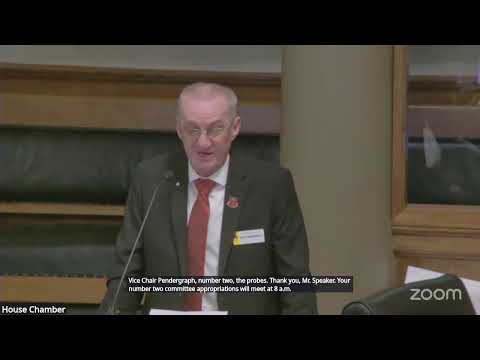
House adopts changes to wildfire plan after debate over task force, mitigation funding and helicopter crews
Summary
Lawmakers approved Senate File 152 after floor amendments that removed an independent task force, added funding tools and later included targeted grants and aircrew funding. Debate centered on whether a task force was necessary or whether existing committees and the state forester should lead the response.
The Wyoming House passed Senate File 152, a bill addressing wildfire management and state forester duties, after multiple floor amendments and votes that reshaped the measure’s implementation and funding over several hours of debate.
Senate File 152 began as a bill to restore depleted wildfire response accounts, clarify the state forester’s responsibilities and create a task force to compile lessons learned after the state’s large 2024 fire season. Representative Bair, the bill sponsor, moved a third‑reading amendment that removed the proposed task force and its specific funding; proponents said the same work could be accomplished by the legislature and the state forester through interim committee work and existing structures.
Supporters of retaining a task force argued the breadth of the problem — shifting federal resource availability, volunteer fire district reliance and operational communication gaps — required a dedicated, collaborative body over the summer and fall. Representative Sherwood noted federal staffing changes and said, “if that task force isn’t in place over the summer and fall, there’s less time for them to make recommendations” before next year’s fire season. Other members, including Representative Byron, who has firefighting experience, said members with field training should be directly involved.
After extended debate, House members adopted Representative Bair’s amendment to remove the task force and instead direct committees and the state forester to gather lessons and propose solutions during the interim. The amendment passed on roll call 32 aye, 27 no, 3 excused.
Floor action continued with further amendments addressing funding and operational capacity. Representative Bair later offered an amendment to create a loan program for wildfire mitigation ($152 million figure was discussed on the floor as the potential lending pool tied to redirected funds), which the House adopted. Representative Harrelson moved an amendment that allocated roughly $52 million of appropriated funds to establish a helicopter and crew positions and about $49.48 million for grants targeting noxious weeds and invasive species; that amendment was adopted as well (34 aye, 26 no, 2 excused).
Supporters framed the funding as tools for mitigation, firefighter safety and long‑term community resilience. Representative Harrelson highlighted specific operational gaps seen in 2024 and said the proposal would provide “long term ability to cover those large capital cost type projects,” including aviation assets. Opponents cautioned about vehicle‑overlap with the budget process, constitutional limits on altering appropriations across measures and the risk of creating new or duplicate supplemental budget authorities inside this bill; Representative Harshman and others warned that inserting budget language into a policy bill set an unusual precedent.
The House ultimately approved the amended bill on third reading; the final passage roll call was 46 aye, 14 no, with two excused. Under the adopted package, the bill adjusts state forester duties, removes the standalone task force language in favor of interim committee engagement and creates a set of mitigation tools including loans and targeted grants. It also authorized funding for aviation assets and temporary crew positions described on the floor.
Lawmakers noted several narrow but important administrative provisions included in the debate: setting standards for privately contracted fire crews to improve communication with incident commanders, creating mechanisms to fund long‑term mitigation projects (including proceeds from sales or federal pass‑throughs), and directing committees to synthesize field input for next session.
What’s next The adopted amendments and the bill’s passage send the measure to enrollment. Committees, state agencies (including the state forester’s office) and local fire districts were identified in floor remarks as the next actors to operationalize the changes; some lawmakers said they expect additional appropriations or statutory fixes in subsequent legislation or the budget process to carry out large capital purchases.