Get Full Government Meeting Transcripts, Videos, & Alerts Forever!
Get email alerts on the State Legislation topic
No spam. Unsubscribe anytime.
Little Government Relations briefs Douglas County on Kansas mid-session priorities: permitting, public benefits and budget changes
Summary
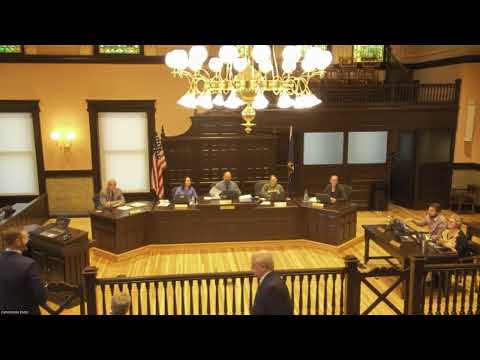
Little Government Relations briefed the Douglas County Commission on Feb. 26 about a fast-moving 2025 legislative session and several bills the county is tracking, from permitting reform to proposals about public funds, public benefits and property-tax changes.
Stewart of Little Government Relations briefed the Douglas County Commission on Feb. 26 about developments in the 2025 Kansas legislative session and bills the county is monitoring.
Stewart said the Legislature adopted a compressed schedule this year that has accelerated committee and floor work and left less time for local governments and stakeholders to analyze and respond to fast-moving proposals.
Bills of note Stewart described:
- Fast-track residential permitting: legislation would require a jurisdiction to issue a yes-or-no decision within 60 days of a residential permit application. The bill passed the House and was likely to receive Senate consideration. - Home-based business changes ("no-impact home-based business"): proposal would broaden activities allowed at residences and narrow local zoning controls for certain home-based operations; it passed the House in its current form. - Public-funds bidding and municipal deposit rules: financial institutions proposed changes to how public entities award deposits; after negotiations county and municipal associations reported that the most problematic provisions (a requirement to accept a particular preferred bid) were removed, though collateral and other changes remain under discussion. - Measures on undocumented noncitizens and public benefits: bills under consideration would restrict some public benefits for undocumented noncitizens and expand requirements such as E-Verify for certain employers; these bills drew attention and hearings were planned. - Property-tax proposals: competing approaches were under debate, including a Senate measure capping assessed-value increases at 3% and a House constitutional amendment that would use a six-year rolling average of appraisals to mitigate valuation swings.
Stewart also reviewed the unusual budget process underway (the Legislature started from a flat baseline rather than the governor's recommended budget), and flagged several other items the county has followed, including a bill that would prohibit using SNAP benefits to buy sugary food and a wave of bills addressing oversight or enforcement in health and human services programs.
He noted the state appropriations process and committee schedules remained in flux and that county staff were actively engaging with committee chairs and legislators on several items, including potential state funding tied to the region's participation in FIFA World Cup 2026 preparations.
Ending: Stewart said staff would continue to monitor bills and that county administrators would return with additional details as committees take up or finalize measures of county interest.