Get Full Government Meeting Transcripts, Videos, & Alerts Forever!
Get email alerts on the Public Finance Bonds topic
No spam. Unsubscribe anytime.
Douglas County authorizes bond issuance to finance Judicial and Law Enforcement Center and Public Safety Building
Summary
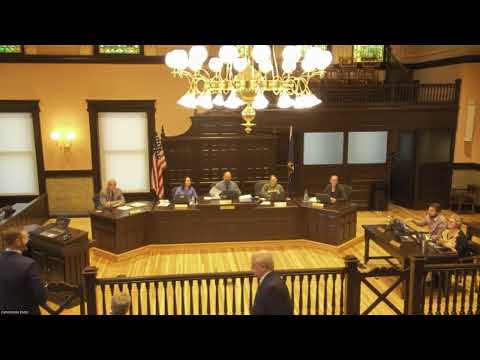
Douglas County commissioners on Feb. 26 adopted Resolution No. 25-13, giving the county authority to issue bonds to pay a portion of the estimated $82,000,000 cost to renovate the county's Judicial and Law Enforcement Center and build a new Public Safety Building.
Douglas County commissioners on Feb. 26 adopted Resolution No. 25-13, giving the county authority to issue bonds to pay a portion of the estimated $82,000,000 cost to renovate the county's Judicial and Law Enforcement Center and build a new Public Safety Building.
The resolution, described to commissioners by bond counsel Garth Herman of Gilmore & Bell, recites the authority from a countywide retail sales tax election and the state sales tax election statutes and authorizes the county to issue bonds in an amount later set by subsequent actions. "This simply gives you the authority to issue bonds in the amount that you need," Herman said during the presentation.
Why it matters: the tax-backed bonds will be payable from proceeds of the county's 1% countywide retailer sales tax (the sales-tax election cited in the resolution). County staff and financial advisers said adopting the resolution is the first of three statutory steps required under state law before the county can close on a bond sale.
How the process will proceed: Ben Hart, the county's financial advisor with Baker Tilly, told commissioners the county will run a public sale process in which investment banks submit bids and the county awards the sale to the best bidder. Hart said the current marketing expectation for interest rates is similar to a recent comparable sale where bids produced an interest rate around 3.83 percent; he noted market conditions can change. He also said the county typically structures this kind of issue with roughly a 20-year maturity and a call (prepayment) feature typically set around eight years. "On sale day is May 9," Hart said as an example of the timeline he expects for the marketing and sale process.
Next steps: Herman outlined the remaining steps: a sale resolution that sets the sale date and authorizes the sale process, followed after the sale by a bond resolution that finalizes repayment terms and closes the issue 2-3 weeks later. At closing the county receives the sale proceeds and may apply them to project costs.
Formal action: the commission voted to approve Resolution 25-13. The motion was moved and seconded during the Feb. 26 meeting; commissioners voted in favor and the motion passed with all commissioners recorded as voting yes. The resolution does not itself set the exact principal amount to be sold or the final repayment terms; those will be set after the sale and in the subsequent bond resolution.
Speakers and sources at the Feb. 26 meeting included bond counsel Garth Herman (Gilmore & Bell), financial adviser Ben Hart (Baker Tilly), and county staff identified in the record as Sarah (county staff). County minutes and the resolution text will specify the precise dollar amounts and final financing plan when the sale and bond resolution are adopted.
Ending: County staff said they will return to the commission with the results of the bond sale and the bond resolution for final approval before closing and using proceeds to pay project costs.