Get Full Government Meeting Transcripts, Videos, & Alerts Forever!
Get email alerts on the American Indian Education topic
No spam. Unsubscribe anytime.
Roseville’s American Indian Education program details cultural programming, funding and student voices
Summary
Presenters described expansion of American Indian affinity groups, cultural activities, federal and state funding and near‑100% participation; APAC submitted a resolution and requested increased follow-through and additional liaison staffing.
Roseville Area Schools’ American Indian Education team on Feb. 26 described a districtwide program of affinity groups, cultural activities, family nights, field trips and plans for a pilot week‑long cultural summer program, and outlined federal and state funding that supports the work.
Dylan Smith, associate superintendent of equity and innovation, introduced Gabriella Carroll, the district’s American Indian Education program coordinator, and Savannah Rojas, Native American culture liaison. Carroll and Rojas reviewed affinity-group formats (elementary groups meet roughly every other week; secondary groups meet weekly), traditional activities (moccasin game, beading circles, smudging), distribution of indigenous‑authored books each season, and student field trips to the Minnesota Historical Society and other community events.
Carroll explained federal funding comes through the U.S. Department of Education’s Title VII Indian Education Program and is linked to consent form (506) counts. She said the program has increased the number of 506 forms on file from eight forms when she started to about 59 this year. On state funding, the Minnesota Department of Education’s American Indian Education Aid base award for 20 Native American students is $40,000 with $500 for each additional student; Carroll said the district received $124,500 this year under that program.
Presenters played a recorded student video in which several Native American students described affinity groups as places that help them “stay focused,” “feel more at home” and “provide a sense of community.” Students named trusted adults in the district and gave mixed responses on whether they see their Native identity reflected in core curriculum; several older students said homeroom materials have helped but some core courses still “water down” or skim Native histories.
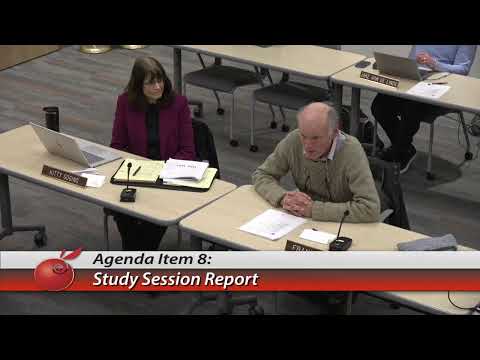
Carroll and APAC representatives highlighted program growth: near‑100% participation in Native American affinity groups, increased family engagement, and a planned summer cultural pilot in June. They also outlined APAC’s review of five grant goal areas submitted to MDE (postsecondary preparation, academic achievement, culturally relevant curriculum, positive self‑perception and district collaboration). The parent advisory committee (APAC) reported mixed implementation: some strategies were implemented consistently, others were not, and APAC recorded a vote of non‑concurrence on overall grant progress this year, citing inconsistent district follow‑through outside the Office of Educational Equity.
APAC asked the board for several commitments, including stronger districtwide follow‑through on the grant strategies, policy changes to ensure Indian Education staff are invited to IEP, DRB and attendance meetings that affect students, prioritizing grant funds for programming over increased staffing allocations, and adding 0.5 FTE for an additional Native American liaison to reduce staff burnout.
The program coordinators invited the community to the annual powwow on April 12 at Champlin Park High School and said they will pilot the week‑long cultural summer program in June. Board members commended the presenters and the student video; several board members said they will follow up on APAC’s requests to understand the “why” behind strategies that were not implemented.