Get Full Government Meeting Transcripts, Videos, & Alerts Forever!
Get email alerts on the Signage Ordinance topic
No spam. Unsubscribe anytime.
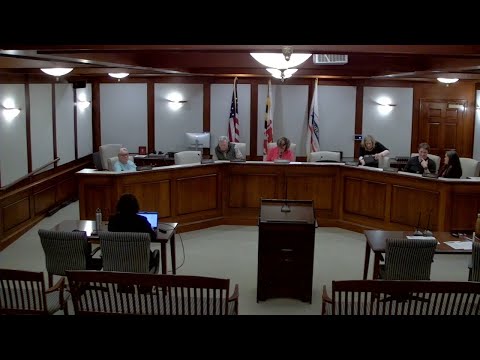
Commission continues lengthy review of proposed sign ordinance; electronic messaging centers and exemptions draw debate
Summary
The Planning & Zoning Commission spent most of its Feb. 26 meeting reviewing proposed changes to the town’s sign ordinance, debating exemptions for small and window signs, size and timing rules for electronic messaging centers, directional sign heights and open‑house sign removal times.
The Chesapeake Beach Planning & Zoning Commission continued a detailed review of proposed changes to the town’s sign ordinance on Feb. 26, focusing on exemptions, electronic messaging centers (EMCs), and illumination. Commissioners asked staff to refine draft language and return at a future meeting; the group did not adopt final ordinance language on signage at this session.
Planner Miss Franklin led the presentation and said the draft exemptions are largely standard but raised several points for the commission to decide, including whether to limit exempt, small on‑premises signs by number or by aggregate area. The draft currently reads that on‑premises signs under 4 square feet are exempt provided the total area of all such signs does not exceed 10% of the building face or 100 square feet, whichever is less. Commissioners said a 100‑square‑foot aggregate exemption could be large on some buildings and suggested instead limiting the number of small, exempt signs per face or per building.
Franklin explained rules for several categories in the draft: - Exempt small on‑premises signs: typically under 4 sq ft; draft limits aggregate area to 10% of the building face or 100 sq ft (whichever is less). - Neon/open signs: one 'open' neon sign per business exempt if not greater than 4 sq ft and meeting illumination limits set out in the illumination section. - Window signage: exempted signs may not cover more than 20% of a window’s total area. - Real‑estate signs and open‑house signage: draft allows one sign up to 6 sq ft per street frontage plus up to three off‑premise directional signs for open houses, "in place only during daylight hours on the day of the open house while the real estate broker is present." The commission requested clearer wording and to change removal timing language that had referred to deed recording; members suggested using "5 days after settlement" or "after lease execution" as the removal trigger. - Directional signs: the draft permits directional signs that do not contain commercial messaging, with a size limit of 4 sq ft and a height limit listed as 5 feet; commissioners questioned whether 5 feet is too tall for on‑site directional signs and asked staff to research standard heights tied to roadway speeds and pedestrian sightlines. - Flags: beyond national, state and town flags, the draft allows one large flag per lot with a maximum flag height of 30 feet; commissioners asked staff to clarify whether the limit refers to pole height or cloth size and to research typical municipal standards.
Electronic messaging centers (EMCs) generated extended debate. Planner Franklin said EMCs are not currently permitted but the draft contemplates permitting them in commercial districts with a maximum sign area of 16 sq ft; the Board of Appeals could approve an EMC up to 24 sq ft as a special exception. Commissioners discussed whether to allow EMCs broadly, whether to grandfather existing unpermitted electronic signs, and how EMCs affect town character and night‑time illumination. Key technical items discussed for EMC regulation included: - Minimum hold/“dwell” times: examples shown were 5, 10 and 30 seconds; Franklin noted that 3 seconds is considered dangerous as a threshold for rapid changes. "3 seconds is universally accepted as dangerous," she said. - Transitions: the draft allows instantaneous change, fade or dissolve but prohibits continuous scrolling, flashing, spinning, rotating and full‑motion video. - Illumination: the draft ties maximum brightness to ambient light (foot‑candle) measures described in section j; Franklin said most modern EMCs can be set to automatic dimming based on ambient light.
Commissioners expressed concern about creating a corridor of digital signs if EMCs were widely allowed. Several members said the upfront cost of EMCs may limit near‑term proliferation, but others warned that grandfathering non‑permitted existing signs could undermine future compliance. Commissioners asked staff to compile examples and illumination measurements from local signs (for example, the Rod and Reel sign), and to look into how the town’s code platform would display cross‑references so users can more easily find definitions.
Other discussion points: commissioners asked for clearer phrasing for interior signs located near windows (the draft exempts signs located greater than 3 feet from exterior windows); they asked staff to define whether certain decals (credit card decals, small stickers) count toward exempt sign totals; and they requested a shorter, clearer set of definitions or inline cross‑references so readers need not flip between pages.
No final votes on sign‑code provisions were recorded. The commission asked staff to return revised draft language and additional research at a future meeting. The commission scheduled the next Planning & Zoning meeting for March 26 for continued discussion of signage and other items.
Quotes recorded during discussion: - Planner Miss Franklin: "If in order for me to approve a sign that comes in, I have to read what it says, then it probably is not compliant." (on regulating sign content) - Planner Miss Franklin: "3 seconds is universally accepted as dangerous." (on minimum hold time) - Commissioner Laurie Brown: "I love Christmas decorations. I'm always so sad when they come down." (on holiday decorations and whether to impose time limits)
The commission made no substantive adoptions to the sign ordinance at the Feb. 26 meeting; staff will bring revised language and research back to the commission for further consideration.