Get Full Government Meeting Transcripts, Videos, & Alerts Forever!
Governmental Affairs Committee advances bills on housing ownership, landlord contacts, audits, monuments, elections and voter lists
Summary
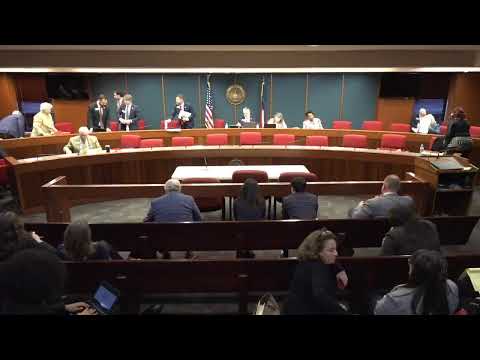
The House Governmental Affairs Committee on Wednesday advanced a package of bills that would require local contacts for large landlords, expand local audit flexibility, create a statutory process for monument relocations, change some municipal election procedures, and move Georgia out of the ERIC voter‑list cooperative.
The House Governmental Affairs Committee on Wednesday advanced a series of measures addressing housing ownership transparency, landlord accountability, local government audit requirements, monument relocation procedures, and several election‑related changes, and voted to withdraw Georgia from the ERIC voter‑list maintenance program.
Why it matters: The committee approved measures the sponsors said are intended to give local governments and residents clearer points of contact for large landlords, reduce audit burdens for small jurisdictions, create a clearer legal path for relocating public monuments, and alter some election procedures. Several measures drew debate about privacy, administrative burden, and access to voting.
House Bill 374 — housing ownership disclosure: Representative Montahan drove the most contested measure, House Bill 374, which would require owners or managers of 10 or more contiguous single‑family rental dwellings within a jurisdiction to register and disclose ownership and a local point of contact, and to update that information within 30 days. The substitute before the committee exempts short‑term rentals and (in the version the committee passed to rules) adjusts the implementation scope. Montahan told the committee the change was aimed at “build‑to‑rent” investments and said in his district a large share of single‑family rentals are owned by a small number of institutional investors; outside experts cautioned the bill as drafted may miss multifamily apartment holdings and urged broader disclosure of ultimate owners to make enforcement and accountability feasible. Opponents including Georgia Association of Realtors and civil‑rights advocates warned of privacy and redlining risks if registries are used in zoning decisions or if personal contact information is made routinely public. The committee ultimately adopted two amendments narrowing the coverage (raising the unit threshold and exempting short‑term rentals) and advanced the bill to the Rules Committee after a tie vote that the chair resolved in the affirmative.
House Bill 399 — broker or in‑state point of contact for large landlords: Representative Margaret Oliver presented House Bill 399, a bill that would require any landlord who operates more than 25 single‑family…
Already have an account? Log in
Subscribe to keep reading
Unlock the rest of this article — and every article on Citizen Portal.
- Unlimited articles
- AI-powered breakdowns of topics, speakers, decisions, and budgets
- Instant alerts when your location has a new meeting
- Follow topics and more locations
- 1,000 AI Insights / month, plus AI Chat