Get Full Government Meeting Transcripts, Videos, & Alerts Forever!
Get email alerts on the Committee Roundup topic
No spam. Unsubscribe anytime.
Governmental Affairs Committee advances bills on housing ownership, landlord contacts, audits, monuments, elections and voter lists
Summary
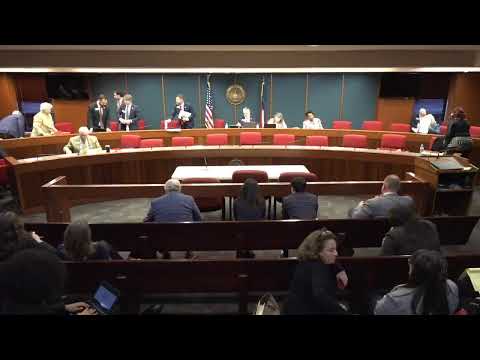
The House Governmental Affairs Committee on Wednesday advanced a package of bills that would require local contacts for large landlords, expand local audit flexibility, create a statutory process for monument relocations, change some municipal election procedures, and move Georgia out of the ERIC voter‑list cooperative.
The House Governmental Affairs Committee on Wednesday advanced a series of measures addressing housing ownership transparency, landlord accountability, local government audit requirements, monument relocation procedures, and several election‑related changes, and voted to withdraw Georgia from the ERIC voter‑list maintenance program.
Why it matters: The committee approved measures the sponsors said are intended to give local governments and residents clearer points of contact for large landlords, reduce audit burdens for small jurisdictions, create a clearer legal path for relocating public monuments, and alter some election procedures. Several measures drew debate about privacy, administrative burden, and access to voting.
House Bill 374 — housing ownership disclosure: Representative Montahan drove the most contested measure, House Bill 374, which would require owners or managers of 10 or more contiguous single‑family rental dwellings within a jurisdiction to register and disclose ownership and a local point of contact, and to update that information within 30 days. The substitute before the committee exempts short‑term rentals and (in the version the committee passed to rules) adjusts the implementation scope. Montahan told the committee the change was aimed at “build‑to‑rent” investments and said in his district a large share of single‑family rentals are owned by a small number of institutional investors; outside experts cautioned the bill as drafted may miss multifamily apartment holdings and urged broader disclosure of ultimate owners to make enforcement and accountability feasible. Opponents including Georgia Association of Realtors and civil‑rights advocates warned of privacy and redlining risks if registries are used in zoning decisions or if personal contact information is made routinely public. The committee ultimately adopted two amendments narrowing the coverage (raising the unit threshold and exempting short‑term rentals) and advanced the bill to the Rules Committee after a tie vote that the chair resolved in the affirmative.
House Bill 399 — broker or in‑state point of contact for large landlords: Representative Margaret Oliver presented House Bill 399, a bill that would require any landlord who operates more than 25 single‑family homes to employ a state‑licensed broker and to have at least one person located in Georgia responsible for tenant communications about maintenance and other issues. Oliver cited institutional purchases of single‑family homes and said, "In my personal district, House District 84, DeKalb County, 42% of the homes are institutionally owned at this point." Committee members supported the substitute that incorporates real‑estate industry suggestions and a request from the attorney general’s office. The committee voted to pass the bill in subcommittee and then in committee.
House Bill 244 — audit flexibility for small local governments: Representative Chaz Cannon presented a substitute that raises expenditure thresholds so smaller cities and counties can use less costly audit options. State Auditor Greg Griffin summarized technical changes, saying the bill raises the threshold for full GAAP audits from $550,000 to $2,500,000, expands use of agreed‑upon procedures engagements, limits AUP use to four consecutive years with a full audit every fifth year, and allows the state auditor to grant threshold exceptions. Cannon noted many smaller jurisdictions are ineligible for state grants when audits are delinquent and said the changes aim to increase compliance while reducing cost. The committee approved the substitute and passed the bill.
Monument Protection Act (House Bill 467): Representative Powell presented a substitute called the Monument Protection Act, which clarifies claimants, permits injunctions, and creates a statutorily defined pathway for local governments to offer monuments to interested parties before relocation. Powell said the bill is intended to reduce litigation and provide a clear administrative route for relocation or transfer. Members debated municipal authority and cost; the committee approved the substitute on a hand vote and the chair cast a deciding vote when the counted votes were tied.
Elections bills and Saturday voting (House Bill 397 and related changes): Representative Fleming presented a consolidated elections substitute (LC473466S) that includes several changes: it clarifies appointment/removal authority for State Elections Board appointees, allows municipalities to opt out of required Saturday advance voting for purely municipal elections (subject to local decision and with amendments adopted to require some public notice/public meeting), adjusts special election timing, and removes an infrequently used odd‑year special election date. The committee debated access concerns at length, with members arguing the change offers local flexibility in small municipalities while others warned it risks reducing convenient voting options. The committee adopted amendments that require local public discussion before opting out of a Saturday and advanced the measure.
House Bill 324 — priority access for voters with disabilities or special needs: Representative Martinez presented HB 324 to require preferential processing during advanced voting and certain hours on Election Day for voters who are blind, deaf, amputees, pregnant, aged 75 or older, or accompanied by children 2 years or younger or children with special needs. Supporters said the change codifies existing courtesies for voters who have mobility or caregiving constraints; members asked whether the provision relies on voter self‑identification and whether additional categories (for example dementia/Alzheimer’s) should be spelled out. The committee approved the bill.
House Bill 215 — withdrawal from ERIC voter‑list system: Representative Montahan presented HB 215, a bill to remove Georgia from the Electronic Registration Information Center (ERIC). Montahan and proponents argued many neighboring and other states have withdrawn and that Georgia should rely on state‑to‑state data arrangements rather than a multistate non‑profit. Speakers debated data security, effectiveness and whether alternative state‑to‑state approaches would be as complete; the committee passed the bill on a recorded hand vote.
Other measures: The committee also advanced several relatively non‑controversial or technical bills: HB 513 (service delivery strategy statutory cleanup), HB 521 (deannexation timing and shapefile requirement for redistricting), and other items presented for committee approval.
Votes at a glance (committee action): - HB 399 (LC 473483S) — landlord broker/in‑state contact for owners of >25 single‑family homes: motion to pass carried (voice vote; approved). Sponsor: Rep. Margaret Oliver. - HB 244 (LC 473465S) — local government audit flexibility (raise thresholds; AUP rules): motion to pass carried (voice vote; approved). Sponsor: Rep. Chaz Cannon. State Auditor Greg Griffin provided technical summary. - HB 467 (LC 280679S) — Monument Protection Act (substitute): motion to do pass carried after recorded hand vote; chair cast tiebreaking affirmative vote (tied count reported; bill advanced to Rules). Sponsor: Rep. Powell. - HB 397 (LC 473466S as amended) — elections omnibus (municipal Saturday opt‑out, appointments/removals, special election timing): substitute as amended advanced (voice votes; approved). Sponsor: Rep. Fleming. - HB 324 (LC 473464S) — preferential processing for voters with disabilities/caregivers/elderly: motion to do pass carried (voice vote; approved). Sponsor: Rep. Martinez. - HB 215 (ERIC withdrawal) — motion to do pass carried on a recorded hand vote (count recorded in committee; approved). Sponsor: Rep. Montahan. - HB 374 (LC 443119S) — housing management database / foreign‑ownership disclosure (as amended to raise threshold and exempt short‑term rentals): committee vote initially tied; chair cast affirmative vote and the bill was advanced to Rules for consideration. Sponsor: Rep. Montahan. - HB 513 (service delivery strategy cleanup) and HB 521 (deannexation timing) — both advanced on unanimous or voice votes with sponsor privilege noted.
What committee members asked and what comes next: Members pressed sponsors on implementation details, privacy and open‑records implications, and whether local governments have the capacity to use registries and databases. Support organizations (GMA, ACCG) signaled support for audit flexibility and the point‑of‑contact provisions; housing researchers and civil‑rights groups urged narrower or strengthened language on registries to avoid stigmatizing residents and to ensure useful ownership detail (ultimate parent company, aliases). Several bills advance to the Rules Committee; those that require statutory updates or implementation changes (audit thresholds, housing registry) will need follow‑up to define reporting formats and enforcement authorities.
The session closed after the committee resolved several tie votes by the chair and put the amended housing disclosure measure on the Rules calendar for further consideration.