Get Full Government Meeting Transcripts, Videos, & Alerts Forever!
Get email alerts on the Dnr Boarding Standards topic
No spam. Unsubscribe anytime.
Panel debates raising legal standard for DNR vessel stops; department and conservation groups clash
Summary
Representative Ridley proposed changing the standard for Department of Natural Resources vessel stops to probable cause. DNR and conservation groups warned such a change would hamper patrols and public-safety checks; retailers and boating-safety volunteers supported the current reasonable‑suspicion practice.
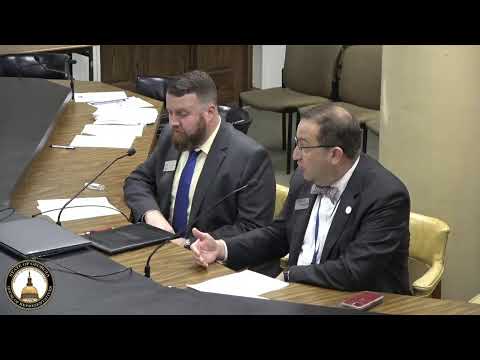
A proposal to require probable cause before Department of Natural Resources officers may stop and board vessels prompted robust debate at the Judiciary Noncivil subcommittee, with agency law‑enforcement leaders, conservation groups and boating-safety advocates testifying on opposite sides.
Representative Ridley said House Bill 195 seeks parity between traffic stops and vessel inspections: the change would raise the legal standard for an initial vessel stop to probable cause. He said the intent is to protect Fourth Amendment rights and prevent fishing expeditions by officers.
DNR witnesses argued the change would seriously curtail boater-safety work. Thomas Bernard, deputy commissioner and former law-enforcement colonel with DNR, told the subcommittee that the department currently operates with about 200 wardens statewide covering thousands of miles of rivers and hundreds of thousands of acres of impoundments, and that requiring probable cause for initial stops would reduce the agency’s ability to find intoxicated or dangerously equipped vessels. "Reasonable suspicion allows you to grab the white boats as they come through to check for a brief... Do you see that? Cut them loose and keep grabbing folks as fast as you can," Bernard said, describing hit‑and‑run and safety‑inspection scenarios.
Colonel Mike England, director of DNR law enforcement, said the agency’s policy has required reasonable articulable suspicion since 2008 and supervisors monitor compliance; he said the department uses stops to prevent drownings, enforce life‑jacket and equipment requirements and investigate marine-pollution complaints. "I would much rather pay a ticket than to lose a loved one," England said in describing enforcement as prevention.
Conservation and boating-safety groups — including the Georgia Wildlife Federation and the United States Power Squadrons — urged retaining the reasonable‑suspicion standard. They emphasized the distinctive, fluid environment of waterways compared with roads and said wardens generally exercise discretion focused on safety rather than general surveillance.
Opponents argued the current code lacks parity with roadway stops and raises risk of fishing expeditions. Representative Ridley and others said existing statutes for road stops do not permit arbitrary searches of vehicles and that boat stops should require a similar standard. He urged DNR and prosecutors to craft statutory language that both protects constitutional rights and preserves boater safety.
The committee did not adopt final language; the sponsor and DNR were tasked to negotiate a workable standard and any amendments before the bill returns for further action.
Ending: Members asked DNR and the sponsor to draft compromise language; no vote was taken.