Get Full Government Meeting Transcripts, Videos, & Alerts Forever!
Get email alerts on the Density Bonus topic
No spam. Unsubscribe anytime.
Caldwell proposes density-bonus program; commissioners ask for public review and higher‑level approvals
Summary
As part of Amendment Package 2, City staff proposed a density‑bonus program tied to public benefits (deed-restricted affordable housing, park construction, public facilities). Commissioners asked for mechanisms that require hearing‑body or council review before bonuses are granted.
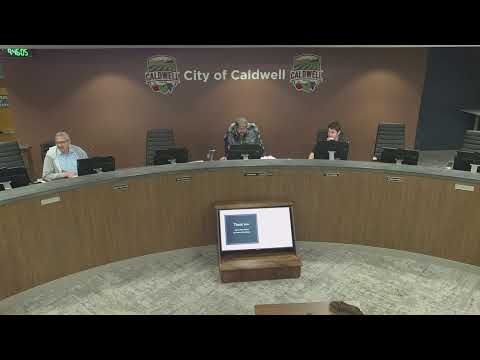
City of Caldwell staff presented a proposed density-bonus program during a Feb. 26 Planning & Zoning Commission workshop, describing a points-based system that would grant increases in residential density in exchange for community benefits.
Joe Dodson, senior planner, said the density-bonus matrix ties bonus percentages to categories of community benefit (for example, deed‑restricted affordable units, dedication/construction of public facilities, or sizable on‑site public amenities). The program is intended to implement objectives in the comprehensive plan that encourage housing variety and public improvements in exchange for increased units per acre.
Minimum criteria and mechanics
- Applicability: staff proposed the density-bonus program would apply in specified zones where residential use is permitted (but explicitly not in the R‑1 zone, which is capped at 8 dwelling units per acre). Dodson and Collins emphasized R‑1 would remain excluded from the bonus program.
- Points system: bonuses would be awarded by accumulating points for qualifying actions; larger public benefits would earn more points. Examples discussed include dedication or construction of major public facilities (parks, community centers), deed‑restricted affordable housing, and on‑site public open space; very large or high‑value public contributions would receive the highest point values.
- Thresholds: staff said the scoring system is intended so that smaller items alone would not produce the maximum bonus; instead, projects would need multiple benefits or a high-value public benefit to achieve larger density increases.
Commissioner feedback and process concerns
Commissioners questioned the administrative pathway for awarding bonuses. Several commissioners asked whether staff scoring alone would grant increased densities or whether requests should be heard by a public hearing body.
- Commissioner Larson and others said the scale of allowable bonuses makes the review appropriate for a hearing body; Larson said density decisions carry significant long‑term effects and argued for commission or council review rather than a one‑person administrative approval.
- Commissioners emphasized the need for predictability and guardrails: they asked staff to clarify what documentation/deed restrictions would be required, how long affordability covenants must last, and which public benefits qualify and how they will be measured.
Staff response and next steps
Robin Collins said staff had not yet proposed the procedural route for final approval (administrative sign‑off versus public hearing), and asked commissioners for feedback. Commissioners expressed a preference that density‑bonus awards be subject to a public hearing; staff indicated they would incorporate that input when drafting final ordinance language and present options to council.
No formal vote or action was taken at the workshop; staff said they will revise the proposed code, seek legal review and return with a recommended process that addresses commissioner concerns.