Get Full Government Meeting Transcripts, Videos, & Alerts Forever!
Get email alerts on the School Bus Safety topic
No spam. Unsubscribe anytime.
Committee advances bill to enforce local votes on school-bus seat belts
Summary
The House Transportation Committee voted to pass House Bill 1536, which would add enforcement language to a 2017 local-control law allowing voters to require seat belts on new school buses or approve millage to cover the cost.
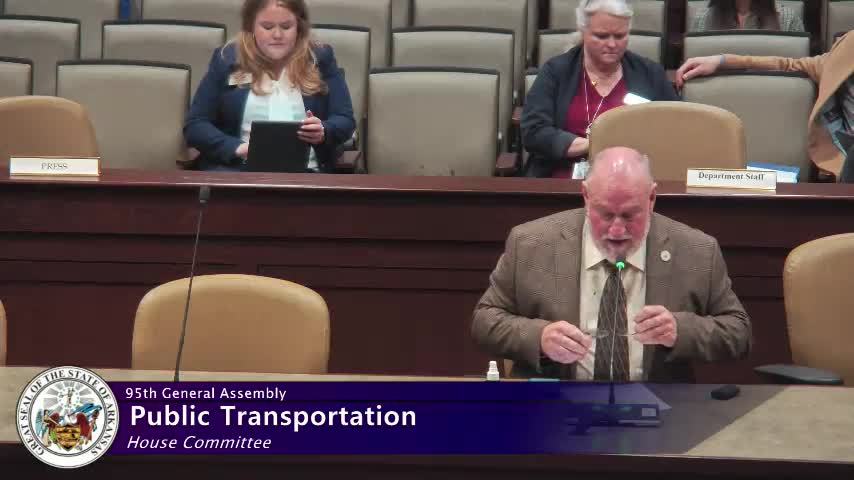
Representative McElroy, sponsor of House Bill 1536, told the House Transportation Committee that the bill “puts teeth” into a law he authored in 2017 that lets registered voters in a school district petition for seat belts on new school buses or for a millage question to pay for them.
Under the 2017 local-control law described by McElroy, if 10% of a district’s registered voters sign a petition, the school board must either place a millage question on the next regular school board election to pay the incremental cost of equipping new buses with seat belts or forgo the election and buy future buses with seat belts. McElroy told the committee that the incremental cost per bus was about $12,000 in 2017 and is “about 20,000” now; he said retrofitting older buses costs about $30,000 and that the original law was intended to apply only to newly purchased buses.
McElroy described taking a petition to his local school board after collecting more than 300 signatures and said the board chose the forego option rather than put the millage question before voters. He said he waited from February 2018 to February 2024 for compliance and raised the bill after learning new buses purchased for his district lacked seat belts. “All this bill does is put teeth in a... bill that I passed in 2017,” McElroy said during his presentation.
Committee members asked how the law would work in practice. Representative Torrez and others clarified that the 2017 law applies to new buses going forward rather than retrofitting older vehicles. President Steinle asked about enforcement and whether students would be required to wear the belts; McElroy said implementation decisions would be left to local districts. “How are you going to police the use of these seat belts?” President Steinle asked. McElroy responded that the bill is local-control and that districts would determine enforcement and implementation.
McElroy also cited changes in national safety guidance, saying the National Transportation Safety Board’s stance has shifted as agencies install more cameras and observe crash dynamics. He framed HB 1536 as a mechanism to ensure that when voters follow the petition process the school board either places the millage question on the ballot or equips future buses with seat belts.
After discussion, Representative McElroy moved to pass the bill. The committee approved the motion by voice vote; the chair announced the bill passes and it will proceed to the House floor.