Get Full Government Meeting Transcripts, Videos, & Alerts Forever!
Get email alerts on the Short Term Rental Licensing topic
No spam. Unsubscribe anytime.
Committee reviews short-term rental permits; council hears concerns about enforcement and neighborhood impacts
Summary
City staff updated the committee on the short-term rental permitting program created in TMC chapter 702, reporting hundreds of active listings online but only a small portion licensed. Council members and residents said enforcement, neighbor notification, parking and code compliance are outstanding issues.
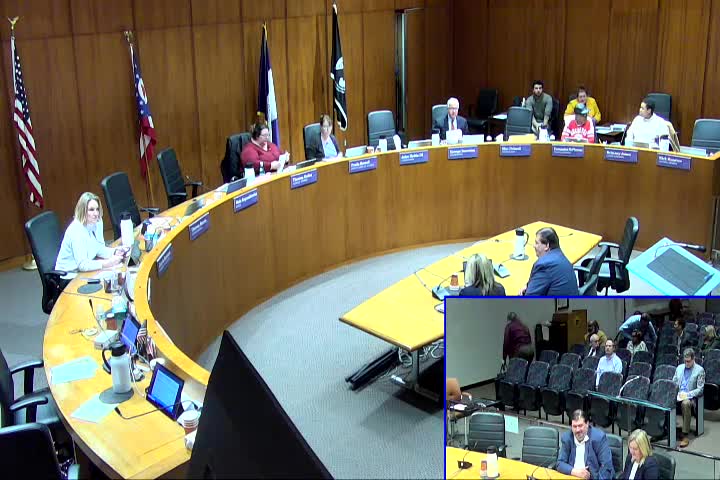
Melanie Campbell of the Department of Finance briefed the Housing and Community Development Committee on Toledo's short-term rental permitting requirements (TMC chapter 702) at the February 26 meeting and answered questions from council members and residents.
Campbell summarized the permit requirements: operators must file an online application with operator contact information, pay a $50-per-unit fee, provide a certificate of tax compliance, proof of current public-utilities payment, an affidavit of life-safety compliance, proof of insurance, a local contact, and a site plan; operators must also notify adjacent property owners that a short-term rental is operating. The city treats a permit as applying to units; one license can cover multiple units at the same address.
Campbell said the program began issuing licenses in 2022 and supplied a recent count for 2024: the city has issued licenses covering 43 units in the latest reporting period and earlier issued a total of 29 licenses in earlier years (staff said they would confirm exact historical counts on request). She told the committee staff could review third-party listings if council provided a list, but noted that obtaining comprehensive lists from platforms would carry a cost if the city contracted outside vendors to compile addresses.
Council members and residents raised several enforcement and operational concerns. Councilwoman Theresa Gaddis said third-party listings appear numerous: 'When we enacted the legislation, there were 50 short-term rentals in the city. As of today, there's 440 active Airbnb and VRBO listings,' she said, and asked what the city was doing to reach unlicensed operators. Staff said they would evaluate lists and pursue outreach but that compiling addresses from platforms has practical limits and may require paid services.
Questions focused on neighbor notification, parking, code compliance, police coordination for large or noisy gatherings, and how the city tracks complaints. Council members said operators are required to notify adjacent property owners under the code but acknowledged the city does not automatically verify every notice; staff will follow up on complaints. The committee discussed penalties: staff said operating without a permit can trigger a $100-per-week penalty up to a $500 cap, and that short-term-rental enforcement differs from convenience-store enforcement in maximum penalties and process.
Several short-term rental operators spoke in favor of the program and described different hosting models. Nick Melinda of the Old West End said his family hosts primarily longer-stay guests such as visiting artists, hospital staff, and families, and warned against blanket restrictions that would reduce available nonhotel lodging. Daniel Finkel, who described his unit as his personal residence used mainly for out-of-town workers, urged the committee to recognize distinctions among hosting types and said the annual $50-per-unit renewal was burdensome for small operators.
Staff asked the police department to strengthen information sharing so patrol officers can be aware of licensed units and report suspected unlicensed activity. Committee members asked staff to follow up with Airbnb and VRBO platforms or with vendors that compile listing addresses to identify potential unlicensed units.
Ending: Staff will confirm historical issuance counts, evaluate lists of third-party listings on request, and work with police on strengthening complaint and enforcement pathways. Council members signaled the need for further refinement on neighbor-notification verification, parking requirements, and the interplay between code compliance and permit enforcement.