Get Full Government Meeting Transcripts, Videos, & Alerts Forever!
Get email alerts on the Redistricting Apportionment topic
No spam. Unsubscribe anytime.
Committee approves study into constitutional apportionment, seeks 'good‑faith' county‑line approach
Summary
Senate File 174 passed the committee after proponents said the bill directs a management‑council study of legislative apportionment and asks the legislature to explore ways to better follow Article III, Section 3 of the Wyoming Constitution while respecting the federal one‑person‑one‑vote requirement.
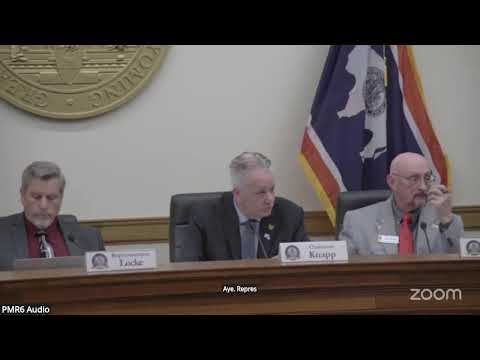
The committee passed Senate File 174, a bill directing the management council to assign legislative apportionment to a study committee during the 2025 interim and to explore approaches that make a "good‑faith effort" to align legislative districts with county lines where practicable. The roll call recorded nine ayes and the bill passed the committee.
Senator Driscoll, who sponsored the bill, said the proposal responds to concerns from several northeastern and western Wyoming counties that believe the state Constitution's language — which historically sought a senator and representative per county and to keep county lines intact — has not been followed since federal equal‑protection rulings implementing one person, one vote. "The founders wanted county lines respected in a very large way," he said, adding the bill provides findings and a path to study whether the constitution can be followed or whether a constitutional amendment is needed.
The bill requires the management council to commission a study during the interim and notes the study may recommend statutory or constitutional changes; it does not itself change apportionment. Proponents framed the bill as a planning vehicle that would allow the Legislature to develop redistricting principles in a non‑contentious, out‑of‑cycle setting rather than during immediate redistricting debates.
Opponents and cautioning voices raised constitutional and practical constraints tied to the U.S. Constitution's equal‑protection standards and to the Supreme Court precedent on one person, one vote. Marguerite Herman of the League of Women Voters and others noted the numerical disparities among counties mean literal application of county‑based representation would massively increase the size of the Legislature or leave large populations underrepresented. "Government represents people. They don't represent acres," Herman said, urging the committee to weigh equal‑representation principles.
Witnesses included local county constituents, and policy staff from the Secretary of State's office indicated support for the bill's approach to study apportionment. The committee recorded a roll call and approved the measure (tally: 9 ayes). The bill now proceeds to further legislative steps for consideration.