Get Full Government Meeting Transcripts, Videos, & Alerts Forever!
Get email alerts on the Process Training topic
No spam. Unsubscribe anytime.
Staff gives commission an overview of development review and comprehensive‑plan roles
Summary
Planning staff presented a training 'boot camp' on the city’s development‑review process and how comprehensive‑plan policy informs entitlement decisions; commissioners asked for timelines and clarifications about development agreements and plat approvals.
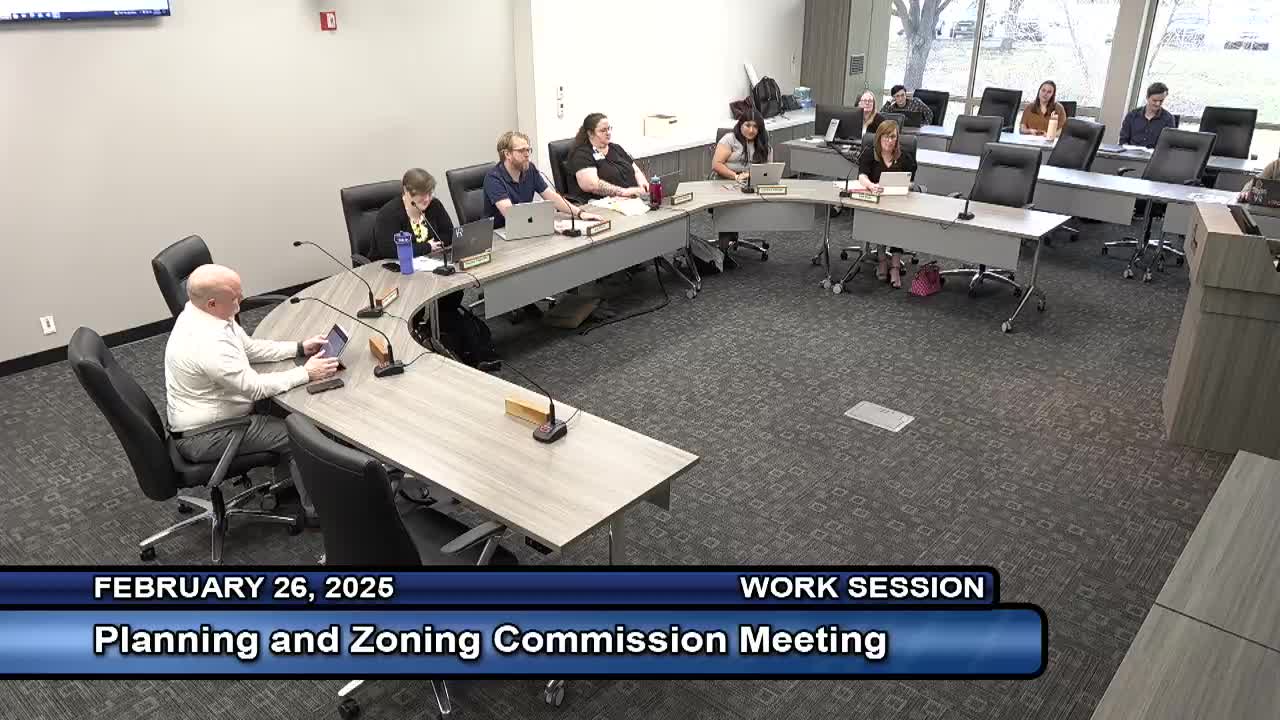
At the Feb. 26 meeting staff delivered a planning 'boot camp' outlining the development‑review process, the structure of the Denton Development Code and the role of the comprehensive plan in entitlement reviews.
What staff covered Mia Hines, senior planner, explained the steps from feasibility/pre‑application through application, preconstruction, construction and final acceptance. Hines described tools used by the city (zoning, planned developments, plats, specific use permits, alternative ESA plans, civil engineering plans) and the roles of internal reviewers — planning, engineering, building safety, public works, fire and consultants — plus the development facilitators who coordinate reviews. Hines and other staff emphasized that the comprehensive plan is a policy document (Denton 2040) used to evaluate requests but that regulatory requirements live in the Denton Development Code.
Timelines and typical review periods Staff provided typical timeframes: plan developments and specific use permits often take about 4–6 months; zoning amendments typically 3–4 months; alternative ESA plans 4–6 months. Hines noted that timelines vary by completeness of submittal, responsiveness, neighborhood concerns and complexity.
Commissioner questions and clarifications Commissioners asked how plats differ from zoning/land‑use approvals (plats establish official property boundaries and are generally ministerial if they meet code requirements), when development agreements are negotiated (often during feasibility or application stages and handled by staff/city attorney; development agreements and municipal‑utility‑district agreements go to council rather than commission), and how to estimate the share of buy‑right projects versus entitlement‑driven projects (staff said they could attempt to derive numbers from permit and case records for a future report).
Implication Staff said the boot camp series will continue with deeper dives into particular topics (PDs, annexations, SUPs, technical review) to help newer commissioners and refresh long‑serving members. Commissioners asked staff to provide example timelines and to note where commission review occurs versus administrative approvals.