Get Full Government Meeting Transcripts, Videos, & Alerts Forever!
Get email alerts on the Budget topic
No spam. Unsubscribe anytime.
Prince George County staff outline FY2026 budget choices after reassessment raises tax base
Summary
County staff told the Board of Supervisors that a third-party reassessment raised the county's taxable base and increased the value of a penny to about $420,000, giving the board options for school funding, personnel requests and public safety funding while a loss of a DCJS grant may cost three school resource officers.
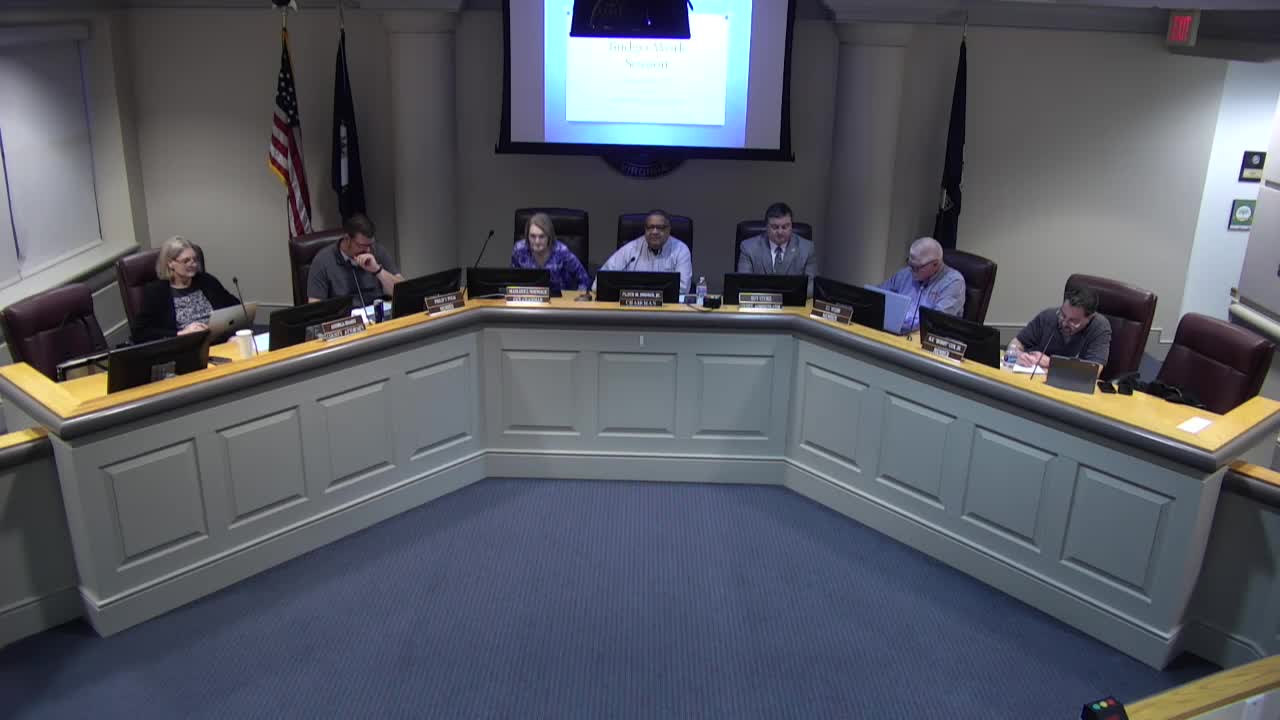
Prince George County budget staff told the Board of Supervisors on Feb. 26 that a third-party real estate reassessment has raised the county's taxable base and given the board a range of choices for the FY2026 budget, including whether to equalize the tax rate or leave more revenue available for schools and county services.
The reassessment, conducted with a third-party contractor Vision and the assessor's office, raised the land book from about $4.06 billion to $4.58 billion, an increase of roughly $522 million, Betsy Drury, the county's budget presenter, told the board. "The value of a penny has increased from $372,000 today to $420,000, an increase of $48,000 per 1 cent," Drury said as she walked supervisors through revenue options.
Why it matters: the board must set a real estate tax rate to fund schools and county operations. Drury said the county's current real property tax rate is 82 cents per $100 of assessed value. Using the new assessed values, a nine-cent equalization would lower the rate to an estimated 73 cents; keeping the rate at 82 cents would increase projected real estate tax revenue by about $4.2 million (from a budgeted $30,750,000 to about $34,950,000).
School funding options and MOU: Drury reviewed the county's revenue-sharing memorandum of understanding (MOU), in place since February 2007, which uses a five-year rolling average comparing school enrollment to county population to calculate the local transfer to schools. Under the current model, higher assessed values but flat school enrollment would reduce the schools' share; Drury presented three board options for FY2026: (1) keep the current MOU calculation, (2) freeze the percentage at this year's level, or (3) set aside a chosen share (Drury illustrated 40%) of growth for schools. Under the current model and an unchanged 82-cent rate, the schools would receive an increase of roughly $879,000; under full equalization to 73 cents they would receive about $483,000 less than this year.
Grant loss and school resource officers: Drury told the board that a DCJS School Resource Officer (SRO) grant that currently funds three sworn officers assigned to three elementary schools expires at the end of the fiscal year, producing a county shortfall of just over $125,000 if the positions continue to be funded locally. "If staffing is adequate within the police department, Chief Early could choose to keep those officers assigned," Drury said. Otherwise, she said, the officers could be reassigned to patrol and the schools would lose the three SROs. Schools also employ seven non-sworn security personnel, four funded in part by a separate DCJS school security grant.
Must-dos vs. choices: Drury presented a categorized list of budget "must-dos" (contractual obligations, mandated pay increases, health insurance increases, and regional contributions such as jail and library contracts) and a series of choices (tax-rate equalization, additional pay adjustments, new positions and one-time capital requests). She said must-do items and inflationary cost increases exceed the non-real-estate revenue increases (about $962,000 projected without real estate tax changes), leaving the board to decide how much of the reassessment growth to use for operations, schools or reserves.
Personnel, public safety and fire/EMS requests: County staff documented 44.5 new position requests across departments, plus a number of reclassification requests. Notable public-safety requests included multiple new fire captains, a deputy fire chief, 15 fire medics and several police positions. Drury emphasized the additional cost of vehicles and equipment tied to many new positions and suggested the board could purchase vehicles with fund balance to avoid recurring budget increases.
Fire and EMS leaders told the board they face staffing and equipment pressures. Drury said the county has 187 sets of turnout gear that will expire within five years and that fire officials proposed smoothing replacement by buying about 40 sets per year. On grant funding, the board heard that a federal SAFER grant application is no longer viable. "You can consider the SAFER grant avenue as dead," Fire Chief (audience speaker) said, citing uncertainty at the federal level.
Timeline and next steps: Drury said staff will present an introduced budget March 11 and will seek authority to advertise tax rates, including any effective tax increase, at a March 13 work session. She asked supervisors for feedback by the March 4 work session and offered to meet individually to populate the budget-choice spreadsheet she distributed.
Board action: the meeting adopted the evening's agenda by motion (moved by Mr. Pugh; seconded by Mr. Cox) on a roll-call vote in which all listed supervisors voted yes. The board later adjourned by motion (moved by Mrs. Wymack; seconded by Mr. Cox).
What was not decided: the board did not adopt a FY2026 tax rate, choose a school-funding option, nor approve any new positions; those decisions remain pending in upcoming work sessions.
Ending note: County staff posted Drury's slides and said the underlying Excel "choice" spreadsheet will be emailed to supervisors and posted to BoardDocs for completion ahead of the March 4 and March 11 deadlines.