Get Full Government Meeting Transcripts, Videos, & Alerts Forever!
Get email alerts on the Entertainment District Mou topic
No spam. Unsubscribe anytime.
San Antonio council hears nonbinding plan with Spurs for downtown entertainment district; funding, community outreach remain unresolved
Summary
San Antonio Mayor Ron Nirenberg and city staff on Feb. 26 presented a draft, nonbinding memorandum of understanding (MOU) with Bexar County and the San Antonio Spurs to begin planning an entertainment district around Hemisfair, the Frost Bank Center and the Alamodome.
San Antonio Mayor Ron Nirenberg and city staff on Feb. 26 presented a draft, nonbinding memorandum of understanding (MOU) with Bexar County and the San Antonio Spurs to begin planning an entertainment district around Hemisfair, the Frost Bank Center and the Alamodome.
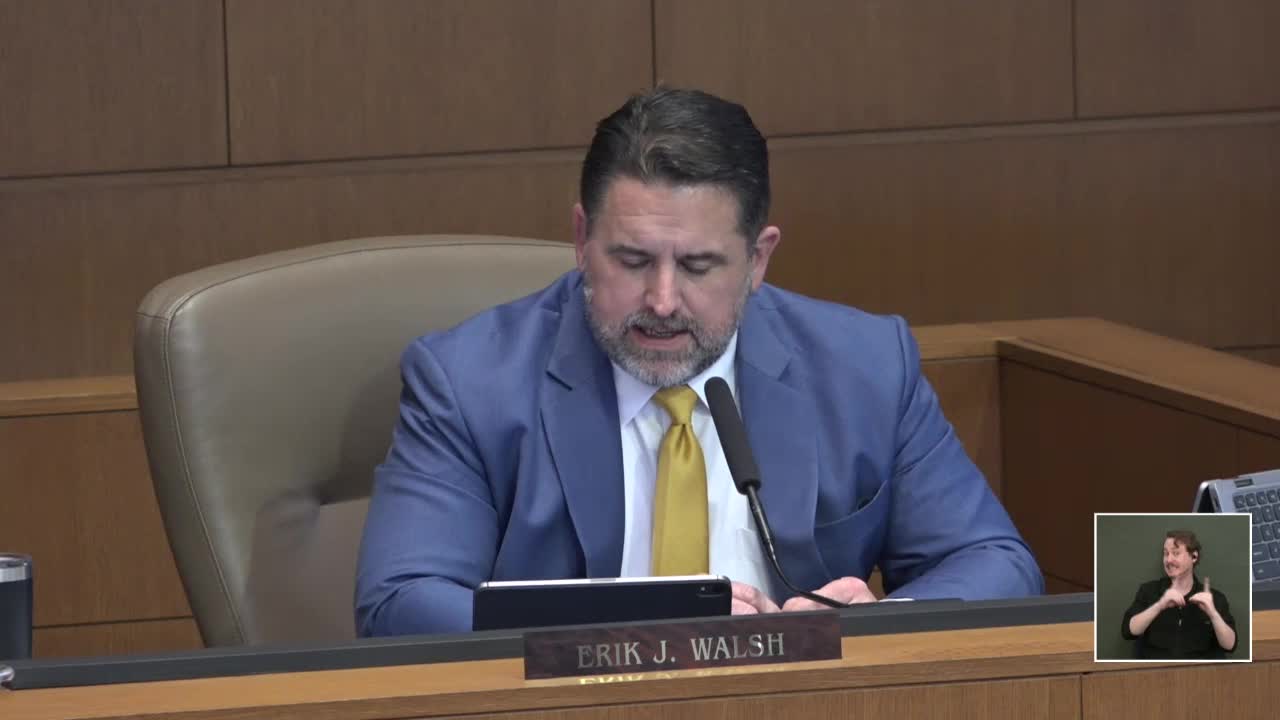
City Manager Eric Walsh said the MOU is intended to “communicate the will of the parties to collaborate” and is not a binding contract. “Este memorándum es un documento no comprometedor,” Walsh said, emphasizing that final agreements and specific financing decisions would return to the council for approval.
City staff framed the proposal around several interdependent projects: expansion of the convention center, a new or renovated arena to house the Spurs, a revised plan for the Alamodome, a potential hotel tied to the convention center, public-space improvements along the Riverwalk/Hemisfair corridor and a “landbridge” to reconnect neighborhoods divided by IH‑37. Laurie Bent, the staff member leading the presentation, described possible uses in the district and said elements will be phased. “La primera etapa es acerca de espacio público,” Bent said, and later noted an arena of roughly 18,000–20,000 seats was being considered.
Ben Grossel, identified in the presentation as the city’s chief financial officer, outlined funding mechanisms under consideration and cautioned that the project is preliminary and interdependent. Grossel discussed a financing zone the staff calls a PFZ (created in 2023) and used a high-level projection figure of about $2.5 billion in incremental revenue over time; he described that number as illustrative and subject to change as due diligence proceeds. Grossel said the convention center expansion was being sized in early work at roughly $700 million–$900 million and that the proposed center‑city hotel was shown at about $750 million in staff materials; he labeled all figures “preliminary.”
City staff described a mix of potential funding sources the council could consider: proceeds tied to the PFZ, hotel occupancy taxes (including voter-approved increases if pursued), state grants, private equity and naming-rights revenue. Staff said some uses of hotel tax revenue are constrained by state law and that any voter-approved tax increase would be required for certain options.
Councilmembers raised concerns about community engagement, displacement and impacts on East Side neighborhoods. Councilmember Mickey Rodríguez pressed for greater inclusion of the councilmember for District 2 and neighborhood groups in negotiations, saying East Side residents “would have more faith in that process” if they were involved early. Councilmember Terry Castillo and others repeatedly asked for specifics on financing, timing and infrastructure — including relocation costs for a water plant staff identified as potentially impacted — and for regular public updates. “We have to be more honest, more transparent,” Councilmember Jalen White said, calling the draft MOU “vague.”
Willow Springs golf course, raised repeatedly by councilmembers, was flagged in the draft MOU as a potential site for redevelopment. Several councilmembers objected to removing or redeveloping green space in predominantly East Side neighborhoods and requested a formal role in any negotiations that affect that property.
City staff told the council that the action expected on the following day’s agenda would be limited: to authorize staff to proceed with negotiations and further diligence on an MOU. The staff presentation and the MOU concept are for the council’s review; any final financing plan or binding agreement must return to the council for formal approval.
The council did not adopt a final agreement at the Feb. 26 session. Instead, members asked staff to provide more detailed analyses, to develop a community‑engagement plan and to update the council regularly as negotiations and due diligence proceed.
What happens next: Staff said they will continue due diligence on project costs and financing, consult with the county and the Spurs, and return to the council with a timeline and public engagement schedule. City staff also said they expect to refine cost estimates and financing scenarios as market studies and negotiations advance.