Get Full Government Meeting Transcripts, Videos, & Alerts Forever!
Get email alerts on the Stakeholder Positions topic
No spam. Unsubscribe anytime.
Stakeholders divide on cap‑and‑trade reauthorization: utilities, manufacturers and EJ groups set priorities
Summary
(This article summarizes public comments and written positions delivered during the committee hearing.)
(This article summarizes public comments and written positions delivered during the committee hearing.)
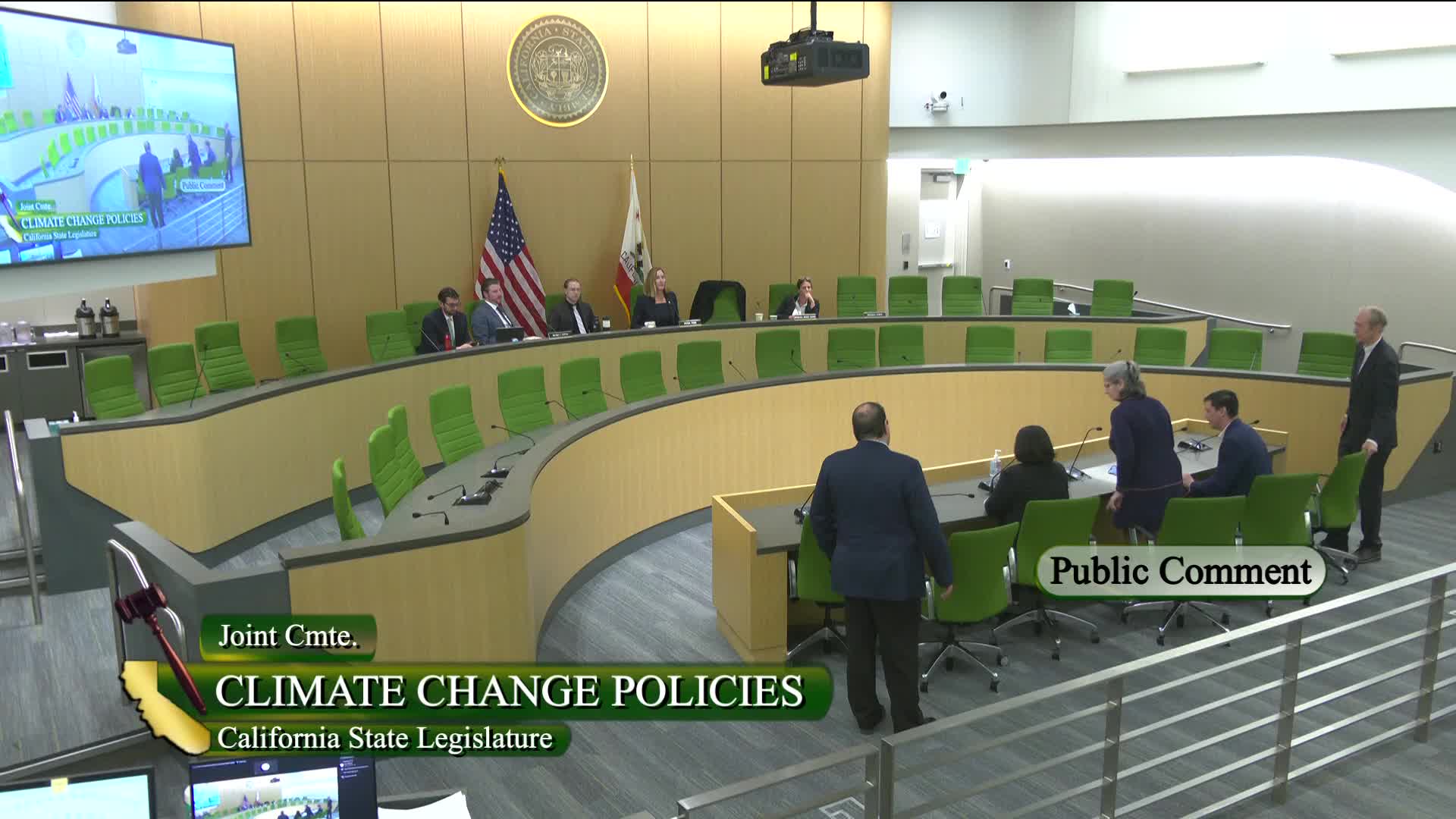
A wide array of stakeholders gave one‑minute public comments expressing the breadth of views on cap‑and‑trade reauthorization and GGRF spending.
Environmental justice and frontline community groups argued for program reform and for directing more auction revenue to disadvantaged communities. Katie Valenzuela (Center on Race, Poverty, and the Environment) criticized industry allocations and said AB 398’s leakage assistance factor once provided broad transfers to industry that removed funds from community investments. Catherine Garupe (Central Valley Air Quality Coalition) and other EJ representatives asked that the legislature and CARB explicitly include environmental‑justice recommendations in any reauthorization.
Conservation and forest interests urged using auction dollars to fund nature‑based solutions and forest resilience. Paul Mason (Pacific Forest Trust) and supporters recommended visible investments in fire mitigation, urban greening and HVAC upgrades in heat‑vulnerable communities. The Nature Conservancy recommended directing 25% of future auction revenues to nature‑based solutions and enabling some natural investments to act as backstop reductions for the program’s price ceiling.
Utilities and publicly owned utilities supported reauthorization with continued or increased direct allocations to utilities to preserve the California Climate Credit and reduce rate impacts. Representatives from PG&E, Southern California Edison and several public power associations urged that allocations remain available to deliver ratepayer benefits. SDG&E and Southern California Gas emphasized the importance of allocations and a focus on affordability.
Manufacturing and business associations, and the California Chamber of Commerce, urged cost containment, preservation of offsets, and caution on changes that could raise compliance costs and jeopardize competitiveness. The California Manufacturers & Technology Association, Ag Energy Consumers Association and other business coalitions offered themselves as resources in design debates.
Other commenters pressed for continued inclusion of offsets and carbon capture technologies. Developers and industry groups including the Verified Emission Reduction Association and the California Forest Carbon Coalition defended offsets as cost containment and as a funding source for tribal and forest projects. Heirloom Carbon and others urged the state to support carbon removal technologies as part of the 2045 strategy.
Ending: The public comments underscored a consistent theme from the panels: stakeholders want quick technical work from CARB and clearer legislative direction. Many asked the committee to weigh both cost containment and stronger, more visible benefits to vulnerable households when considering reauthorization.