Get Full Government Meeting Transcripts, Videos, & Alerts Forever!
Get email alerts on the Peer Support Mental Health topic
No spam. Unsubscribe anytime.
Wellness in the Woods asks lawmakers to continue peer‑support funding after reporting 54,000+ interactions
Summary
Wellness in the Woods told the Senate Human Services Committee it provided over 54,000 peer‑support interactions across Minnesota in 2024 and asked the committee to continue an appropriation; the committee voted to send the bill to the Finance Committee.
Wellness in the Woods, a peer‑run nonprofit, told the Senate Human Services Committee on Feb. 20 that state funding helped it expand virtual peer support, a warm line and mobile recovery events and that it requests continued appropriation for the 2026‑27 biennium.
“Senate file 2 60 is a continuation of funds appropriated to us in the 2024–25 biennium,” Monica Yaden, the organization’s director of process improvement and communications, told the committee. She said the group recorded at least 54,494 interactions across 83 counties in 2024, including 7,286 virtual peer support interactions, 36,878 phone and text interactions on the warm line, 857 recovery‑focused interactions and 8,362 interactions at 41 in‑person events. The organization said prior biennium funding totaled roughly $300,000 and that, with those dollars, the state paid about $5.50 per documented interaction in 2024.
Founder and CEO Jody Frehault London and director Isaiah Fransen described the peer workforce and rural reach. “We are dedicated to improving access to mental health care, substance abuse recovery for all residents of Minnesota with a focus on reaching rural and underserved communities,” Fransen said. Witnesses told the committee the services are prevention‑oriented and that anonymized caller surveys showed more than 90% of respondents reported improved mental or emotional well‑being after a warm‑line or VPSN interaction.
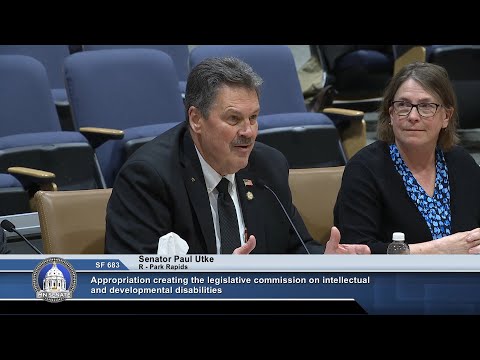
Committee action: Senator Utke moved that Senate File 260 be passed and re‑referred to the Finance Committee; the committee approved the motion by voice vote. Members lauded the organization’s statewide reach and urged the Finance Committee to consider continued support.
Ending: The bill moves to Finance for consideration of continued biennial funding; witnesses said they will continue to provide data and audits requested by state oversight and noted low per‑interaction costs compared with emergency‑level care.