Get Full Government Meeting Transcripts, Videos, & Alerts Forever!
Get email alerts on the Foreign Land Ownership topic
No spam. Unsubscribe anytime.
Committee advances foreign‑adversary land restriction bill after debate over foreclosure language
Summary
House Bill 315, aimed at restricting land purchases by foreign adversaries identified under federal regulation, passed the House Agriculture Committee amid questions from bankers about an unquantified lien in section 8; sponsor and bankers agreed to continue discussions.
The House Agriculture Committee advanced House Bill 315, a measure intended to limit certain land transactions by parties identified as foreign adversaries under federal regulation, after supporters and industry representatives debated language in section 8 related to foreclosure and cost recovery.
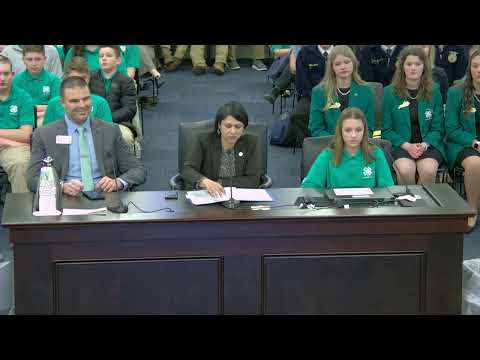
Representative Scott Sharp, who presented the bill, described it as a "foreign adversary land bill to minimize their ability to purchase land here in Kentucky." The bill references federal regulations listing adversarial governments; the sponsor cited "22 code of federal regulations 126.1" as the source for the countries to which the restriction would apply.
Tim Shank, identified as general counsel for the Kentucky Bankers Association, testified in opposition to the mechanics of section 8. He said banks are already regulated and must screen borrowers through the Financial Crimes Enforcement Network (FinCEN), and expressed concern that section 8 would create a "super priority lien" in favor of the Attorney General for "actual costs" of investigations. Shank said that without a defined scope or caps for the Attorney General’s costs, mortgage holders could find their priority liens diminished if the AG’s investigative costs were given super‑priority status.
Representative Sharp acknowledged he had been notified of the bankers' concern shortly before the hearing and said the issue may need coordination with the Attorney General’s office. Several committee members—including Representatives Bivens, McPherson and Hale—expressed support for the bill’s purpose, citing national and food security concerns; others asked for clarification on which foreign nationals would be covered and who updates the federal list.
Committee questioning clarified that the bill was intended to apply to the federal list in 22 C.F.R. 126.1 and that the federal government maintains and updates that code. Bankers and some members asked for follow‑up work on section 8 to define how costs would be calculated and to protect existing mortgage and tax lien priorities. Representative Moore urged the sponsor and the bankers' representative to meet and try to resolve language before any floor action.
The committee voted to report House Bill 315 with a favorable expression; the chair announced the bill "passes with favorable expression" and indicated it will move toward a House floor vote. Several members asked the sponsor and the bankers association to work on possible floor amendments to address section 8 concerns before the bill reaches the full House.