Lifetime Citizen Portal Access — AI Briefings, Alerts & Unlimited Follows
Senate digital‑assets subcommittee zeroes in on stablecoin rules; witnesses urge stronger reserves, AML and resolution tools
Loading...
Summary
Chairwoman Cynthia Lummis and ranking member Ruben Gallego used the inaugural Subcommittee on Digital Assets hearing to press for bipartisan stablecoin legislation, focusing attention on the "Genius Act" and a separate Lummis‑Gillibrand bill that aim to create national rules for payment stablecoins.
Chairwoman Cynthia Lummis and ranking member Ruben Gallego used the inaugural Subcommittee on Digital Assets hearing to press for bipartisan stablecoin legislation, focusing attention on the "Genius Act" and a separate Lummis‑Gillibrand bill that aim to create national rules for payment stablecoins.
The session featured four expert witnesses who recommended clearer prudential standards, stronger AML controls that reach some on‑chain activity, and a dedicated, rapid resolution process for failed stablecoin issuers so holders can recover value quickly.
Why this matters: Stablecoins are digital tokens intended to hold a steady value (often a U.S. dollar) and are increasingly used for online payments and trading. Lawmakers said a federal framework would protect consumers, preserve confidence in U.S. markets and keep payment innovation onshore.
Chairwoman Lummis opened the hearing by urging bipartisan progress. "We want to promote responsible innovation and protect consumers," she said. She called for action both on stablecoins and on broader market‑structure legislation and said she hoped to move bills to the White House this year.
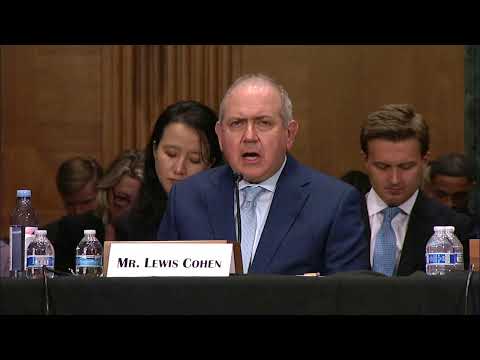
Witness recommendations and points of contention - Reserve design and redemption: Sayeed Masri, chief legal officer of Lightspark, urged 1:1 backing for payment stablecoins and segregation of reserve assets so holders can be made whole. "Stablecoins must be backed 1 to 1 with reserves of high quality liquid assets with carefully calibrated capital buffers and liquidity requirements," she testified. She said issuers should be required to redeem at face value and reserve assets should be held for the benefit of holders and liquidated quickly on resolution. - Bankruptcy and resolution: Former CFTC Chair Tim Massad warned that the Genius Act does not adequately address issuer bankruptcy or a fast resolution process. He said a standard corporate bankruptcy could leave holders in a long, pari‑passu process and recommended a bespoke, expedited resolution that returns money to holders quickly. - AML/BSA and unhosted wallets: Multiple witnesses and senators noted a structural challenge under the Bank Secrecy Act: once a stablecoin is issued on a public blockchain it can move through unhosted, self‑custody wallets without traditional KYC. Massad and others urged expanding the regulatory perimeter and developing technical and legal tools (transaction monitoring, freezing capabilities, or code controls) to reduce illicit finance risks. - Prudential and enforcement standards: Massad and others said the Genius Act includes useful elements but lacks robust prudential standards, strong extraterritorial enforcement language, and clear criminal/civil penalties needed to deter misconduct. Louis Cohen, a partner at Cahill Gordon & Rindell, recommended targeted ongoing disclosure obligations for fundraising issuers and said disclosures could end when the entrepreneurial team’s efforts were no longer essential to value. - Competition and issuer types: Masri urged a multi‑issuer approach that allows banks, bank affiliates and nonbank issuers under common enhanced standards and limits on affiliate transactions, to encourage competition on payments utility rather than on reserve returns.
Consumer protection and payments law Senators raised gaps in existing consumer protections. Committee members asked whether the Electronic Fund Transfer Act (EFTA) and CFPB protections clearly apply to stablecoins; witnesses said the legal status is unclear and recommended explicit coverage or equivalent protections for accounts and custodial services that touch consumers. Senators also pressed for vetting of issuer management and boards similar to banking charters; witnesses generally supported such vetting, saying the Genius Act should add character‑and‑fitness review language.
Other details cited in testimony - The Genius Act includes thresholds and a state/federal parity approach discussed during the hearing; witnesses recommended lowering the proposed $10,000,000,000 market‑cap threshold for federal oversight and making sure states follow minimum federal standards. - Panelists reported that a majority of dollar‑denominated stablecoin activity is tied to offshore issuers; Massad said "three of the five largest dollar‑denominated stablecoin issuers are offshore," arguing for stronger extraterritorial enforcement.
What happens next Lawmakers said they expect continued drafting and possible markup of stablecoin legislation in the Senate Banking Committee. Chair Lummis and several members urged swift bipartisan work to finalize reserve, redemption, AML, enforcement and resolution provisions.
Ending Senators and witnesses agreed on the urgency of creating durable, clear rules for payment stablecoins while protecting consumers and financial stability. Committee members signaled both interest in passing a stablecoin framework soon and continuing debate over the right balance of prudential, enforcement and competition safeguards.