Get Full Government Meeting Transcripts, Videos, & Alerts Forever!
Get email alerts on the Broadband Deployment topic
No spam. Unsubscribe anytime.
Bill would allow local pilot payment‑in‑lieu agreements for rural broadband providers to address assessed property values
Summary
SB 774 authorizes local option pilot programs allowing counties to negotiate payment‑in‑lieu‑of‑tax (PILOT) arrangements with rural broadband providers after testimony that some providers faced assessed tax bills exceeding revenues when subsidies and program costs are not considered in SDAT valuations.
Senate Bill 774, sponsored by Senator Steve Hershey and amended to create a local option pilot program, would allow counties to negotiate payment‑in‑lieu‑of‑tax (PILOT) arrangements with rural broadband service providers when state assessments of operating property produce excessive tax burdens that jeopardize service in underserved areas.
Sponsor and provider testimony: Testimony from Senator Hershey and Diana Sobczak (Think Big Networks) described cases where providers deploying broadband to rural or low‑income areas were assessed by the State Department of Assessment and Taxation (SDAT) on the value of infrastructure without accounting for state or federal subsidies; providers said that led to tax liabilities that, in one cited case, exceeded 50% of revenue until a costly appeal reduced the assessment to roughly 50% of revenue. Providers said they could not pass such costs to low‑income consumers and that local pilot options would permit counties to negotiate sustainable payment arrangements.
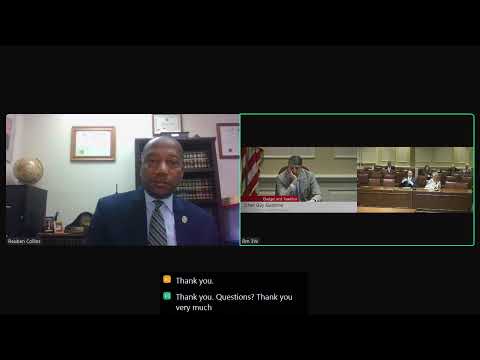
Local government support: Charles County Commissioner Reuben Collins and the Maryland Association of Counties supported the pilot‑option amendment, saying it enables counties to partner with ISPs to close the digital divide while preserving local fiscal discretion. The amendment was described as optional for counties; the state assessment process would otherwise remain unchanged.
Status: Supporters asked for a favorable report with amendment; no committee vote was recorded in the hearing transcript.
Ending: Backers argued the change would encourage private providers to expand rural broadband without unsustainable tax exposure; opponents were not recorded in the hearing transcript.