Get Full Government Meeting Transcripts, Videos, & Alerts Forever!
Motor Vehicle Administration budget, fee proposals and Real ID compliance get scrutiny at subcommittee hearing
Summary
The Motor Vehicle Administration told a House Appropriations subcommittee that its fiscal 2026 allowance rises in the governor’s budget and that it needs flexibility to adjust fees to recover rising costs; DLS recommended denying an increase to the statutory cost‑recovery ceiling and asked the agency to meet current recovery rules first.
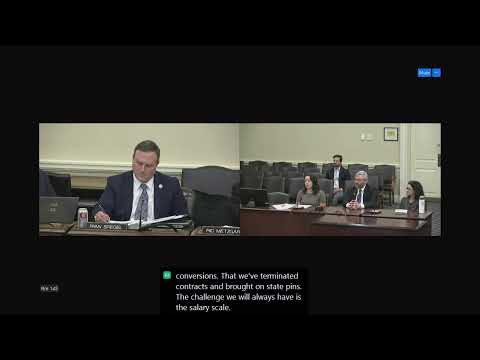
The Motor Vehicle Administration (MVA) appeared before the House Appropriations Committee Transportation and the Environment Subcommittee for its fiscal 2026 budget review, where analysts and agency leaders debated proposed fee changes, Real ID compliance and a new insurance‑verification process.
Budget numbers and proposed fee changes DLS analyst Steven McCullough summarized the MVA fiscal 2026 allowance, noting an apparent $32.8 million or 14.2% increase in the governor’s allowance but explaining that an earlier fiscal 2025 budget amendment added $14.8 million to the current year; after adjusting for that amendment the year‑to‑year increase is about $17.9 million, or 7.8%. McCullough described a set of BRFAA proposals and other budget provisions aimed at increasing MVA revenues and aligning fees with costs: - increase MVA cost‑recovery authority from 100% to 115% (allowing miscellaneous fees to recover up to 115% of specified costs), - restrict vehicle trade‑in allowance to purchases of vehicles costing $15,000 or less, - establish an installment fee for payment plans, - accelerate by one year the phase‑in of an annual registration fee increase enacted last year, - increase the VEEP (Vehicle Emissions Inspection Program) fee from $14 to $30 and index it to inflation.
McCullough recommended the committee deny the BRFAA change that raises the statutory cost‑recovery ceiling to 115% and instead urged the agency to meet current statutory requirements (a 95% cost‑recovery minimum) before seeking an increased ceiling.
Agency performance and operations MVA Administrator Chrissy Neisser and Secretary Paul Wiedefeld highlighted operational improvements: Neisser said the agency reduced wait times by nearly 70% over three years while increasing transactions 16% and reported a 99% customer satisfaction rating. Neisser said over 4.8 million Marylanders are Real ID‑compliant — “well over 98%” — and that TSA planned a phased enforcement beginning May 7, which she said will likely start with education rather than immediate denial of access.
Insurance verification changes Neisser described a statutory change, effective January 1, requiring insurance carriers to send MVA a full “book of business” (all insured Maryland policyholders) so the agency conducts statewide matching and real‑time verification when customers renew registrations. She told the committee the new process aims to reduce erroneous citations and cut uninsured‑motorist rates. The agency acknowledged early implementation issues with some carriers and said it was working to correct transmission problems.
Real ID and other operational notes McCullough asked MVA to provide updated counts of Real ID‑compliant and noncompliant credentials for the committee; Neisser reported the agency’s high compliance rate and described outreach. The analyst also…
Already have an account? Log in
Subscribe to keep reading
Unlock the rest of this article — and every article on Citizen Portal.
- Unlimited articles
- AI-powered breakdowns of topics, speakers, decisions, and budgets
- Instant alerts when your location has a new meeting
- Follow topics and more locations
- 1,000 AI Insights / month, plus AI Chat