Get Full Government Meeting Transcripts, Videos, & Alerts Forever!
Get email alerts on the Pediatric Overstay Rtc Beds topic
No spam. Unsubscribe anytime.
Hospitals, advocates push for residential treatment beds as pediatric overstays persist
Summary
Hospital officials, providers and advocates told the subcommittee that many children cleared for discharge remain in emergency and inpatient beds while waiting for residential treatment center placements; speakers urged retaining funding for programs that add targeted beds and community services.
Hospital leaders, providers and advocacy groups told the Health and Social Services Subcommittee that pediatric hospital overstays remain a serious operational and clinical problem and urged the legislature to retain or restore funding that would add residential, pediatric acute and community services to shorten hospital stays.
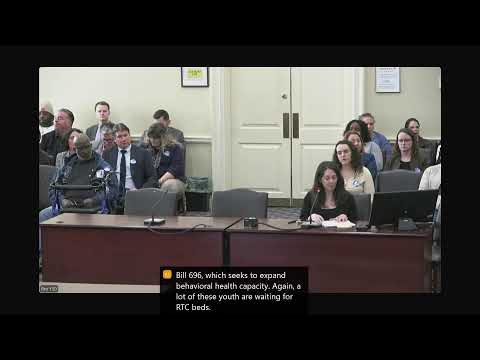
Jane Krenke of the Maryland Hospital Association summarized state data: as of Feb. 14 there were about 59 children across Maryland identified as hospital overstays (medically cleared for discharge but with no placement); nearly 29% were in emergency departments, roughly 73% were aged 16–17 and about 63% were waiting for a residential treatment center, foster home or group home. Krenke noted the average post‑discharge‑ready inpatient length of stay is about 40 days and cited state efforts—legislation and proposed funding—that seek to expand behavioral health capacity for youth.
Brook Lane CEO Jeff O’Neil described a seven‑bed residential program the hospital has stood up to accept youth from emergency departments; the program includes on‑campus schooling and community passes and, according to Brook Lane, accepts clinically complex patients routed through BHA placements. O’Neil warned that the proposed budget cut converting those dollars to traditional inpatient beds would remove a pathway that helps clear emergency departments and said the program had positive outcomes.
MDH and advocates explained other steps to increase capacity, including the Interagency Hospital Overstay Initiative funding (about $5,000,000 appropriated in FY25 with a planned $1,900,000 withdrawal in the fiscal 2026 proposal), planned creation of additional beds at Brook Lane and other rate increases for EPSDT and school‑based Medicaid billing changes. Multiple witnesses called on the subcommittee not to reduce the interagency overstay funding and to consider repurposing existing reversions or available funds to bring beds online sooner.
No formal appropriation decisions were made during the hearing; witnesses and members asked MDH and DBM to follow up with specific options to accelerate bed openings or reallocate available funds.