Get email alerts on the Opioid Response topic
No spam. Unsubscribe anytime.
Gates County begins peer support pilot for post‑overdose response using opioid settlement funds
Summary
Chief Stormy Butts of Gates County Rescue reported that the county has certified one peer support specialist and is launching a peer‑led post‑overdose response team funded with opioid settlement dollars; a county resolution committing funds over five years was described as already signed.
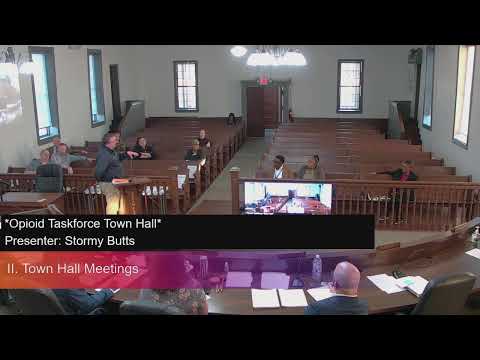
Chief Stormy Butts of Gates County Rescue told a town hall audience that Gates County is launching a peer support program within its post‑overdose response work using opioid settlement funds the county approved for the purpose.
“We're the ones that see them first whenever they call 911 due to an overdose,” Butts said, describing emergency medical services’ front‑line role and the county’s decade of work with Albemarle Regional Health Services on post‑overdose response and harm‑reduction efforts. Butts said the county formed a committee to allocate opioid settlement funds and that a commissioner signed a resolution late last year to spend some of the settlement money over the next five years to add peer support specialists to the post‑overdose response team.
Butts said staff identified county employees who met certification criteria, and one person completed a 60‑hour training in January and received certification this month as a peer support specialist. The certified staff member was not present at the meeting because she was attending a class on substance‑use effects on early childhood development.
Butts said the county’s use of opioid settlement funds will emphasize early intervention and training — including language in the resolution to bring training to teachers — and expand peer support within the post‑overdose response team. He also said the county’s chosen funding approach does not extend to broad primary‑prevention programs at scale. “We went to work looking for a person that qualifies ... she spent 60 hours in a class, and she just received her certification at the beginning of this month,” Butts said.
Butts described operational challenges: identifying people in need who do not call 911, and overcoming trust barriers that can limit uptake of services. He said peer support specialists, who have lived experience, are intended to bridge that trust gap and connect people to resources.
The presentation noted the program is in early stages: one certified peer support specialist is in place, the post‑overdose response team exists and additional peer specialists are being identified for training. The county previously allocated funding through a resolution for a multi‑year plan; Butts said the allocation covers certification and adds peer support roles to existing EMS response activities.
The opioid task force town hall closed and the full meeting reconvened for the regular agenda at 6:00 p.m.
AI generated
The text on this page is AI generated. Summaries, highlights, analysis, and video transcripts are all produced from the original source material.
AI can make mistakes, so if you spot one, and we will fix it for everyone.
Note: the source content is unaltered by us. Any content source we link to, be it a video, an audio recording, or a document, is presented exactly as its publisher released it. That publisher is usually a government body, sometimes an individual official or another organisation.