Get Full Government Meeting Transcripts, Videos, & Alerts Forever!
Get email alerts on the Juvenile Justice topic
No spam. Unsubscribe anytime.
Judiciary Committee advances two juvenile-crime bills; clarifies juvenile-judge warrant authority
Summary
The Judiciary Committee voted to pass a department-sponsored bill clarifying juvenile-court judges' authority to issue arrest warrants and a second measure moving a juvenile-code prohibition on selling a baby into the criminal code; both measures passed by committee voice votes on May 20.
The Judiciary Committee voted May 20 to advance two bills related to juvenile justice and crimes against children.
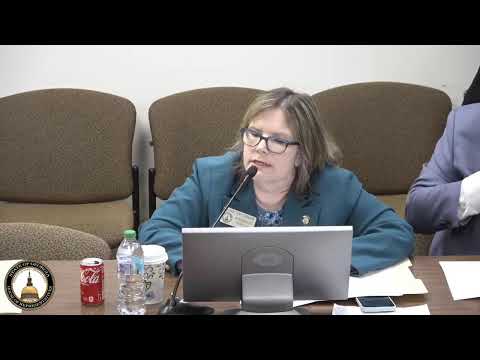
Senator Kirkpatrick presented LC 570179, a Department of Human Services bill intended to resolve an inconsistency between Title 17 (criminal procedure) and Title 15 (juvenile code) about juvenile-court judges’ authority to issue arrest warrants. Kirkpatrick and DHS counsel Regina Quick said the change clarifies that juvenile judges may issue warrants based on probable cause in the same manner as other judges, while preserving the role of prosecuting authorities.
"The judge would be hearing evidence that would constitute probable cause of the offense," Senator Kirkpatrick said while explaining section 3 of the bill that restates authority for juvenile judges. Committee members asked whether juvenile judges typically rely on law-enforcement investigations before issuing warrants and whether the bill could create procedural confusion. Kirkpatrick and Quick told the committee the text merely clarifies existing authority and does not expand it.
After committee discussion, members moved and seconded passage of LC 570179. The record shows an initial tally that committee members recounted and a subsequent voice revote; committee leadership announced the motion passed after the revote. Committee discussion and the record show three opposed votes during the counting, but the final voice vote carried.
The panel then considered House Bill 434 (LC 481487S), described by its sponsor as a measure to import a provision from the juvenile code into the criminal code so prosecutors can more readily find and charge the offense in the criminal statutes. The sponsor said the change does not add or delete elements from the existing juvenile statute; rather it relocates the prohibition into Title 16 to aid prosecution. Committee members asked whether moving the provision would affect interstate compact or adoption practice; the sponsor said the intent is prosecutorial clarity, not substantive change.
A voice vote carried House Bill 434 out of committee with no recorded roll-call tally.
What the committee did not do: Neither bill was amended in committee. Committee members asked for clarifications about mechanics and investigations; sponsors and DHS staff said the bills are intended as clarifying technical corrections.
Votes at a glance: - LC 570179 (Senate bill presented by Senator Kirkpatrick): Motion to pass recorded and carried after a revote; committee announced three opposed votes during the count and declared the measure passed. - House Bill 434 (LC 481487S): Motion to pass carried by voice vote; no roll-call tally recorded.
Next steps: Both measures were reported as passed by the committee and forms were provided to be filed for consideration by the next legislative stages.