Get Full Government Meeting Transcripts, Videos, & Alerts Forever!
Get email alerts on the Criminal Justice Compensation topic
No spam. Unsubscribe anytime.
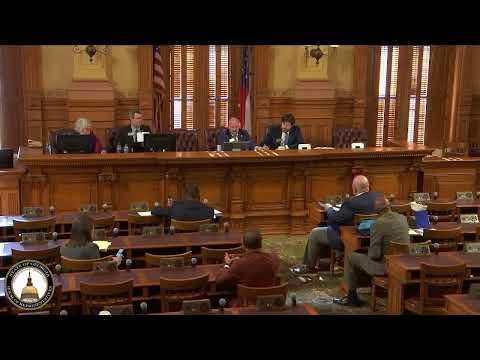
Subcommittee advances compensation resolutions for exonerees, moves multiple House resolutions to full committee
Summary
The General Government Appropriations Subcommittee moved several House resolutions compensating people later exonerated, including Mario Stinchcomb, Michael Wolfolk and Cedric Moore; the measures passed by voice votes and will advance for further consideration.
The General Government Appropriations Subcommittee approved a series of House resolutions seeking compensation for people later exonerated, advancing the measures to the full committee by voice votes.
Representative (first name not provided in transcript) Evans presented House Resolutions 118 and 119. He described House Resolution 119 as compensation for Mario Stinchcomb, whom the Fulton Conviction Integrity Unit later exonerated. Evans said Stinchcomb “spent 18 years in prison for a crime he did not commit,” and that the case turned on a key witness who had been thought dead; that witness was later located and corroborated Stinchcomb’s claim of self-defense. Evans asked the committee to “please vote yes.”
Committee members discussed the case and then passed HR119 on a motion to pass; Representative Mitchell moved to pass and members approved by voice vote. Evans then presented House Resolution 118 on behalf of Michael Wolfolk, whom he described as a co-defendant with a “same scenario, same fact pattern” and likewise exonerated; the committee moved HR118 forward with a motion and voice vote.
Representative Crawford introduced House Resolution 130 on behalf of Cedric Moore, summarizing an incident from 1993. Crawford said Moore was convicted after witnesses and testimony that later proved inconsistent and that modern DNA testing—performed years later—did not match Moore, leading to his release after roughly 16 years of incarceration. Crawford told the subcommittee Moore missed years with family and employment and asked for favorable consideration. The committee voted to pass HR130 and move it on to the full committee.
The transcript records that House Resolution 128 was also called, and a motion to pass was made and seconded; members voted in favor. The meeting included multiple motions and seconds on these resolutions and recorded voice votes but did not record roll-call tallies in the transcript.
Committee members commented on the fairness of current processes for compensating wrongful incarceration; one representative said this should be handled by a uniform formula rather than ad hoc legislative resolution. Presenters and members emphasized the harm of long incarcerations and the limits of monetary compensation to make the exonerees whole.
Votes at a glance: The transcript shows the subcommittee moved HR119 (Mario Stinchcomb), HR118 (Michael Wolfolk), HR130 (Cedric Moore) and HR128 forward by voice vote; all were reported as passed in the subcommittee with motions and seconds and will proceed to additional legislative consideration.