Get Full Government Meeting Transcripts, Videos, & Alerts Forever!
Get email alerts on the Child Welfare topic
No spam. Unsubscribe anytime.
Georgia DHS commissioner outlines child-welfare reforms, hoteling reduction and new Special Victims Unit
Summary
Department of Human Services Commissioner Rose told the Judiciary Committee that the state has reduced use of hotels to house children in foster care, launched new data and placement tools, expanded legal supports and created a Special Victims Unit to recover missing and exploited foster children.
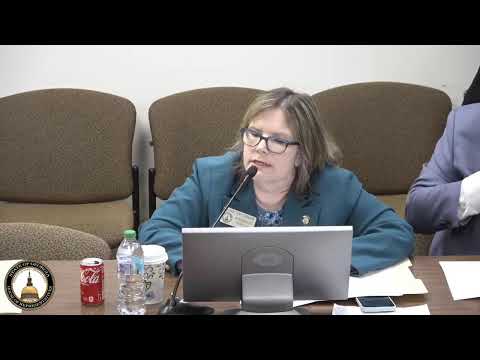
Department of Human Services Commissioner Rose told the Judiciary Committee on May 20 that Georgia has made measurable progress on multiple fronts in child welfare while continuing to face staffing, placement and trafficking challenges.
Rose, who described Division of Family and Children Services (DFACS) as the agency’s largest division with about 7,000 employees, summarized intake and investigation procedures, technology upgrades, placement reforms and a newly formed Special Victims Unit (SVU) that works with law enforcement on missing and commercially exploited foster children.
"Under Georgia's mandated reporting law, teachers, police officers, school officials, doctors, nurses, foster parents, our staff, and others are required to report suspected child abuse," Rose said. She described the centralized CPS hotline — which staff call "Kick" — and the agency’s case management system, Shines. Rose said Kick received 149,786 calls last fiscal year, producing nearly 23,000 reports of suspected child abuse, and that Kick staff average about 800 calls per day.
Rose described the intake process and the distinction between a screened-in case that becomes a child-protective-services investigation and a screened-out intake that can still prompt outreach and referrals. "Many people believe a screen out means that DFACS does nothing, but now you know that is inaccurate," she said.
Why it matters: Rose said Georgia has substantially reduced the number of children placed temporarily in hotels — a practice known as "hoteling" — by coordinating emergency funding, negotiating specialized rates with providers, and launching tools to match children to placements. At peak, she said, the state once placed more than 90 children in a hotel on a single night; after a multi-year effort the numbers have fallen sharply, though emergency placements still occur when a child with complex medical needs cannot immediately be matched to a bed.
Technology and data changes: Rose described a DFACS "data lake" and other portals that aggregate multiple databases into a single login integrated with Shines. She said case managers’ time spent on records checks fell from an annual total of about 91,250 hours to about 5,110 hours after integrating records and adding a keyword search called "Case Notes Search." The agency also deployed robotic process automation to reduce manual data entry for intakes and law-enforcement reports.
Placement and program developments: Rose outlined tools aimed at keeping children with relatives or in the least-restrictive placements possible, including Argo, a real-time one-stop tool to match children to services and placements, and CommuniCare, an upload-and-records portal for parents, foster parents and CASA volunteers. She described two pilot facilities: a 10-bed qualified residential treatment facility at Murphy Harps in Cedartown and Grace’s Place, a 24-bed facility in Gwinnett intended for trafficked children. Both, she said, are intended to help meet clinical needs and to qualify for federal funding when replicated.
Legal and benefits changes: Rose said children entering foster care receive managed-care Medicaid and that the DHS Office of Health Law and Policy now handles insurance denials and vital-records requests to relieve case managers of bureaucratic tasks. She said digital copies of birth certificates for DFACS children had increased from about 58% at launch to roughly 91%.
Staffing and providers: Rose credited recent, bipartisan increases in provider rates and state pay raises for improving recruitment and retention but acknowledged ongoing turnover and provider strain. She said DFACS reported a case-manager turnover rate of 43.6% for fiscal 2024 and 18.4% through January for fiscal 2025 (she said that 18.4% figure is 6.8 percentage points lower than the same month the prior year). Rose urged attention to provider insurance-premium increases and said losing providers would damage the placement network.
Special Victims Unit and missing/trafficked children: Rose described SVU, a unit that reports directly to the DHS commissioner, as a team of specialized case managers, CPS investigators, two deputized officers and technology staff. SVU has participated alongside federal, state and local agencies in recovery operations; Rose said SVU helped recover 13 commercially exploited children in a nine-day operation and has been involved in recoveries of at least 51 missing foster children while working with more than 80 law enforcement agencies since its inception roughly a year ago.
"When they're missing, it is almost a guarantee that they will be exploited since foster children are targeted," Rose said. She outlined typical responses when children run or are lured away: DFACS reports the child missing, notifies the National Center for Missing and Exploited Children, updates its records, and requests law-enforcement assistance. She said the legal and practical mechanics for recovering missing children vary by county and by judge, and that secure transport or police recovery is sometimes limited by liability concerns or lack of court orders.
Training, oversight and quality assurance: Rose said DFACS has Office of Provider Management and Residential Childcare Licensing units that conduct inspections and licensing, and that DFACS, contracted child-placing agencies and other regulators can create overlapping oversight that some providers find burdensome. She said DFACS is working to streamline administrative processes that force staff to spend time on paperwork or special approvals, and described efforts to reduce staff out-of-pocket expenses and simplify small purchases.
Research and targeted studies: Rose described a southeast Georgia pilot autism study led by Dr. Michelle Zena and Georgia Southern University, which found a sixfold higher prevalence of autism among foster children in that region than the general population; DFACS wants to expand the research.
What was not decided: The commission’s presentation was an informational briefing; the committee did not take formal votes on DFACS operations. Committee members asked for follow-up data on placements, returns to home rates, screening percentages and vacancy/experience metrics. Rose committed to provide additional data upon request.
Ending: Rose closed by thanking staff and recounting a caseworker who attended the wedding of two former foster children she had served 24 years earlier, and then invited further questions. Committee leaders moved to remaining committee business.