Get Full Government Meeting Transcripts, Videos, & Alerts Forever!
Get email alerts on the Open Government topic
No spam. Unsubscribe anytime.
City attorney presents Brown Act, conflicts and public‑records guidance to Design Review Committee
Summary
Assistant City Attorney Dave Fleishman reviewed open‑meeting rules (Brown Act), conflicts‑of‑interest standards, public‑records responsibilities and remote‑participation rules with the Design Review Committee in a pre‑meeting training session.
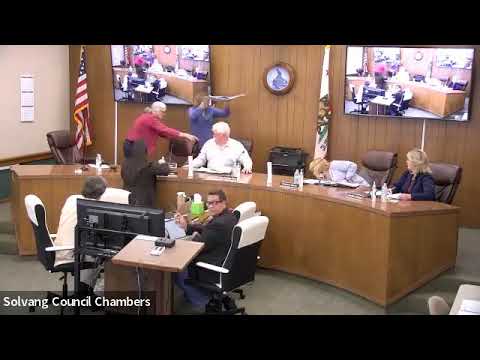
Assistant City Attorney Dave Fleishman led a training session on the Ralph M. Brown Act, conflict‑of‑interest rules, due‑process obligations and the California Public Records Act for the Solvang Design Review Committee during the Feb. 20 meeting.
Fleishman summarized open‑meeting requirements, serial‑meeting prohibitions, and limits on using social media and group emails to discuss agenda matters outside a posted meeting. He warned that “serial meetings” can occur via hub‑and‑spoke or daisy‑chain communications and cautioned committee members not to exchange position statements by text or social media. He said committee members may answer factual questions from the public but should avoid communicating positions on pending matters to other members outside a public meeting.
He reviewed conflict‑of‑interest rules under the Political Reform Act, including the materiality and proximity analyses for property interests and the 500‑to‑1,000‑foot guidance used for reasonably foreseeable financial impacts. Fleishman advised members to seek formal advice from the Fair Political Practices Commission (FPPC) when a conflict is unclear because only the FPPC’s formal written advice can fully insulate an official from enforcement risk.
Fleishman also covered form 700 filing obligations, AB 2449 rules on remote participation, and the Public Records Act’s reach to personal devices when messages relate to public business. He recommended avoiding conducting public business on personal devices when possible and said deleted texts and other messages can remain discoverable.
Committee members asked clarifying questions about how the remote‑attendance rules have changed since the pandemic and the city attorney and staff said they will distribute Fleishman’s slide deck and provide follow‑up guidance as needed.