Get Full Government Meeting Transcripts, Videos, & Alerts Forever!
Get email alerts on the Higher Education Financial Aid topic
No spam. Unsubscribe anytime.
Committee approves amendment to let unused HOPE credits apply to graduate or professional degrees
Summary
The House Higher Education Committee advanced House Bill 385 with an amendment setting an operative date of July 1, 2026, to allow students with unused HOPE scholarship credits to apply them toward specified graduate or professional degree costs, with students paying any per-hour difference.
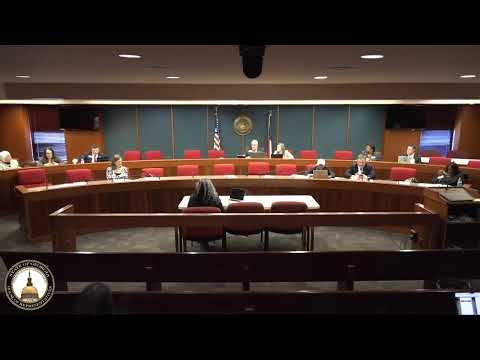
The House Higher Education Committee on Wednesday advanced House Bill 385, which would allow students with unused HOPE scholarship credits to apply those credits toward certain professional or master’s degree programs if the bill becomes law.
Representative Hawkins, who presented the measure, said the bill “provides for those that have unused, HOPE credits that they can apply them towards either a professional or master's degree.” He said the change targets students who have excess HOPE hours after completing an initial bachelor’s degree and would increase “the pipeline of talent for our state.”
The bill would maintain that students are responsible for paying the difference between the undergraduate HOPE rate and the higher professional or graduate per-hour rate. Hawkins told the committee the measure passed last year without opposition but that a Senate amendment led to a veto by the governor; this year he said he intended to keep the bill “clean” to improve its chances.
Committee members discussed implementation timing and whether Student Finance would have adequate lead time to prepare for the program change. Hawkins proposed an amendment setting the bill's operative date to July 1, 2026, to allow the administrative ramp-up. The committee adopted that amendment without objection; the committee then voted to advance the bill to the rules committee by voice vote.
No fiscal estimate or additional statutory cross-references were included in the committee discussion recorded in the transcript. The committee directed Legislative Counsel to prepare a substitute reflecting the July 1, 2026, operative date.
The committee recorded no roll-call tally on the voice votes in the transcript; members signified approval by saying “aye.”