Get Full Government Meeting Transcripts, Videos, & Alerts Forever!
Get email alerts on the Transportation topic
No spam. Unsubscribe anytime.
Chambers back passenger-rail study but say business case must be proven
Summary
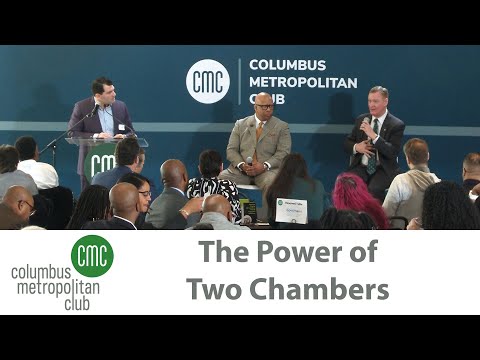
Leaders from the Columbus Chamber and Ohio Chamber told a Columbus Metropolitan Club forum they support studying passenger rail connections for Central Ohio but will require a sustainable ridership and financing case before backing service expansion.
The Columbus Chamber of Commerce and the Ohio Chamber of Commerce said they are open to passenger rail for Central Ohio but want a demonstrable business case before supporting long-term service or funding.
"We are very open to this, but we wanna see the business case and we wanna make sure that it is sustainable, economically going forward," Steve Stivers, president and CEO of the Ohio Chamber of Commerce, told the Columbus Metropolitan Club audience. Stivers said the chambers want to avoid "another white elephant" and that the objective of the current study is to test ridership and sustainability.
Derek Clay, president and CEO of the Columbus Chamber of Commerce, said regional rail could better connect the Columbus hub to other Ohio metropolitan areas and beyond, noting examples from other states. "I rode it, and it was more comfortable than a car. Faster," Clay said of SunRail in Florida as an example of service that could be informative for Ohio.
The discussion followed a question from Chris Amorose Groomes, mayor of Dublin and chair of the Mid-Ohio Regional Planning Commission (MORPC), who noted a MORPC delegation had met U.S. lawmakers and Amtrak representatives and asked the chambers to elaborate on public-private partnership value. Panelists said that if a study demonstrates consistent ridership and a sustainable financing model, public-private partnerships could play a role in development.
Panelists also noted national connectivity would strengthen the case: speakers referenced potential links to Pittsburgh, Chicago and Washington, D.C., and stressed the economic benefits of reducing car travel and improving regional labor mobility. No commitments for funding or formal endorsements were announced at the forum.
Ending: Chamber leaders said they will monitor the MORPC-led study and engage with stakeholders to evaluate whether a passenger-rail project meets business-case thresholds before supporting construction or ongoing subsidies.