Get Full Government Meeting Transcripts, Videos, & Alerts Forever!
Get email alerts on the Medical Ethics topic
No spam. Unsubscribe anytime.
Medical Ethics Defense Act draws hours of testimony from doctors, licensing boards and advocacy groups
Summary
House Bill 222, the Medical Ethics Defense Act, would give broad conscience protections to health-care professionals, institutions and payers; the committee heard hours of testimony and recessed for further drafting and consultation.
House Bill 222, known as the Medical Ethics Defense Act, would create statutory conscience protections for healthcare professionals, institutions and payers in Wyoming. The bill drew extensive testimony from medical providers, licensing boards, hospitals, colleges and legal advocates at a long committee hearing; the committee recessed before final action.
Sponsor Representative Pepper Ottman said the bill is intended to protect health-care workers and institutions from being required to participate in or pay for services that conflict with ethical, moral or religious beliefs. “The bill… protects the rights of healthcare professionals, institutions, and payers in Wyoming to refuse participation in or payment for healthcare services that conflict with their conscience,” Ottman said. She described the measure as covering conscience objections grounded in ethics, morals or religion and said the bill would not alter duties to provide emergency medical treatment that federal law (42 U.S.C. §1395dd, EMTALA) requires.
Supporters, including family physicians and advocacy groups, said broad conscience protections are needed to recruit and retain clinicians who decline to participate in procedures they find morally objectionable. Family physician Dean Bartholomew of Powell testified the bill would protect more than physicians, extending to nurses, technicians, pharmacists and students: “This is a right to refuse for treatment or procedure. This is not a right to refuse the care of a patient,” he said. Those proponents argued a broad statute avoids year-by-year lists of procedures and helps future-proof protections as medical treatments evolve.
Opponents and licensing officials raised concerns about the bill’s drafting and unintended effects. Kevin Bonhambliss of the Board of Medicine said a subsection requiring special notice for any licensing complaint or action (page 10, lines 5–18 in the draft) was “really problematic” because it duplicates and overrides existing licensure process rules and the Wyoming Administrative Procedure Act. He recommended striking that subsection or limiting it to complaints tied specifically to conscience claims under this statute. Department of Health staff noted they lack direct rulemaking authority over many practitioner licenses and suggested relevant licensing boards (medicine, nursing, psychology) would be the proper entities to handle rulemaking for practitioner issues.
Hospital representatives asked the committee to narrow the bill to avoid broad immunity and to ensure whistleblower and patient-safety protections remain enforceable. Eric Boehly of the Wyoming Hospital Association said hospitals already screen for and recruit providers under known policies and cautioned against broadly written immunity provisions. The Community College Commission and nursing-program representatives said including students in the statute could create training and accreditation problems if students refuse curricular activities required for clinical competence; they suggested removing or narrowly tailoring student coverage.
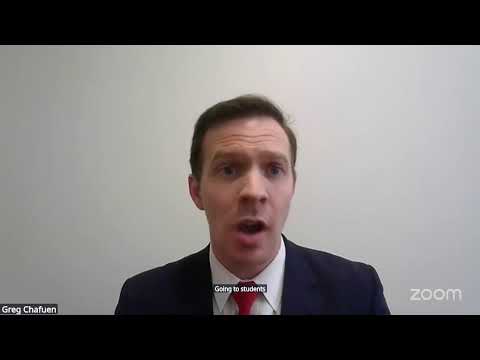
Legal counsel for a proponent organization said versions of conscience protections exist in other states and that courts can evaluate pretextual claims. Alliance Defending Freedom attorney Greg Chaffwin cited seven states with similar protections and said courts can sort genuine conscience claims from pretext.
The committee asked technical questions, and several witnesses offered drafting suggestions — for example, limiting the licensing-notice subsection to matters arising under the act. Representative Ottman said she would continue to work with licensing boards and stakeholders; the committee recessed and planned to resume consideration after adjournment.
Why it matters: The proposal raises core questions about the balance between individual conscience rights and professional obligations, patient access and safety, licensing procedures, and the scope of institutional mission statements. The bill’s scope — covering professionals, institutions and payers and providing civil and criminal immunity in certain circumstances — prompted detailed scrutiny from licensing boards and providers.
Next steps: Sponsors and agency staff said they would confer on drafting clarifications, especially the licensing-notice subsection and whether students should be included. The committee deferred final action pending further drafting and discussion.