Get Full Government Meeting Transcripts, Videos, & Alerts Forever!
Get email alerts on the Anti Slapp First Amendment topic
No spam. Unsubscribe anytime.
Committee hears lengthy debate on anti‑SLAPP measure; sponsors and critics seek more study
Summary
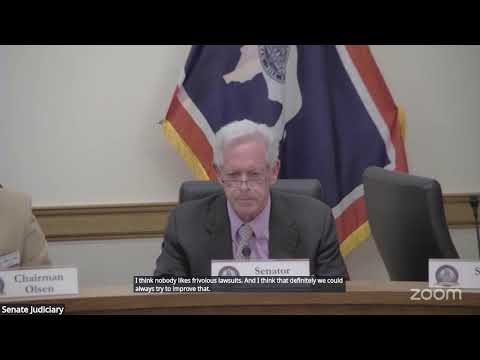
House Bill 223, an anti‑SLAPP (strategic‑lawsuit‑against‑public‑participation) bill intended to create a qualified‑immunity procedure for First Amendment activities, drew extensive testimony and questions; the Senate Judiciary Committee did not advance the bill and the chair urged further review.
The Wyoming Senate Judiciary Committee heard extended testimony on House Bill 223, a proposed anti‑SLAPP statute that would create a qualified‑immunity procedure for First Amendment activities, allow early dismissal of meritless suits, and provide a cause of action and fee recovery in Wyoming when a citizen is sued in another jurisdiction that lacks comparable protections.
Sponsor Representative Aument introduced the bill and said it was designed to protect residents' constitutional rights and to prevent abusive litigation that punishes speech through the cost and burden of lawsuits. "Strategic lawsuit against public participation or SLAPP suit is abusive litigation where a plaintiff brings a legally questionable claim in order to punish the defendant for exercising his or her First Amendment rights," Representative Aument said.
Attorney Jessie Rubino, who assisted the sponsor, told the committee the bill does four things: create qualified immunity for First Amendment activities, provide a procedure similar to a Rule 12(b) motion to dismiss, prevent forum shopping by creating a Wyoming cause of action for successful defendants sued elsewhere, and provide a procedure for limited discovery in immunity motions. Rubino described the proposal as intentionally broad because courts have used licensing, RICO and other mechanisms to chill speech in contexts beyond ordinary defamation claims.
Multiple witnesses described how SLAPP litigation has affected individuals and organizations. Joey Curenti of the Wyoming Digital and Multimedia Independent Trade Association said the bill could help small digital media operators and emerging media that do not fit traditional newspaper definitions; he supported the bill's spirit even as he said some drafting details warranted refinement. Colin Crossman, who testified in a personal capacity and who said he had experience defending a defamation case that cost roughly $250,000 to resolve, explained a drafting choice designed to preserve anti‑SLAPP protections in federal court under Erie doctrine by treating the immunity as substantive rather than procedural.
Mark Randazzo, one of the bill's drafters, said he authored Nevada's anti‑SLAPP statute and had helped draft laws in other states; he described the Wyoming bill as an evolution that addresses perceived shortcomings in Nevada's law. He and other proponents argued the bill includes safeguards such as a required notice of intent before a special motion to dismiss and limited discovery to avoid allowing plaintiffs to use discovery as a harassment tool.
Multiple lawyers and the Wyoming Trial Lawyers Association raised concerns about broad language and procedural mechanics. Mark Aronowitz, representing trial‑lawyers interests, said the bill's definitions and scope appeared overbroad and asked for a tighter description of what constitutes a "strategic lawsuit." Committee members repeatedly questioned the procedural novelty of requiring a notice of intent before filing the special immunity motion and asked whether the bill's scope could unintentionally change practice across all civil actions and in federal court.
Chairman Olsen closed public testimony after extensive questions and said the committee was not prepared to move the bill forward on the last day for committee action. "I think that ... this is a big enough bill that this would be something that you could spend an interim on and still have questions about," the chairman said, urging further work with the bar and the judiciary before a final committee recommendation. The committee took no formal vote to advance HB 223 during the hearing.