Get Full Government Meeting Transcripts, Videos, & Alerts Forever!
Get email alerts on the Public Health Environment topic
No spam. Unsubscribe anytime.
Connecticut Agricultural Experiment Station opens greenhouse, starts PFAS testing and expands vector surveillance
Summary
The Connecticut Agricultural Experiment Station told the subcommittee it opened a new greenhouse on its New Haven campus, plans to bid a Valley Laboratory rebuild in Windsor, is building a PFAS testing capability and continues statewide mosquito and tick surveillance.
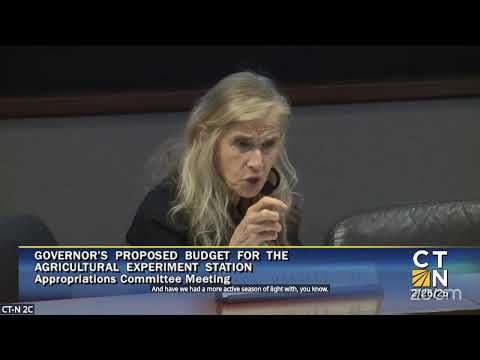
NEW HAVEN — The Connecticut Agricultural Experiment Station briefed the Appropriations subcommittee on March 12, saying its recently completed greenhouse on the New Haven campus is nearly ready, its Valley Laboratory in Windsor is scheduled to go to bid, and the station is expanding analytical capacity for PFAS testing while continuing vector surveillance for mosquitoes and ticks.
Vice-Director Lindsey Triplett and laboratory staff described ongoing projects including a PFAS testing initiative, a new greenhouse opening and the stations long-running mosquito and tick surveillance programs that support public-health partners.
Why it matters: Expanded PFAS testing and formalized vector surveillance inform public-health and environmental decision-making. The station said PFAS testing requires specialized lab supplies and methods because the chemicals are ubiquitous and can contaminate ordinary lab materials.
Details lawmakers heard
- Facilities: The New Haven greenhouse is nearly complete; the Windsor (Valley) lab project is going out to bid in April.
- PFAS testing: The station is standing up a PFAS analytical capability; staff said supplies must be carefully selected to avoid contamination and that the lab will support sample testing from farmland and other locations.
- Vector surveillance: The station runs state surveillance programs for ticks and mosquitoes, testing for pathogens and reporting results to public-health partners. Staff said surveillance recently detected several tick species and that mosquito testing is active each summer.
Ending: Station officials asked legislators to note the facility improvements and said they would continue collaboration with DEEP, DPH and other state partners on PFAS, vector surveillance and lab capacity.