Get Full Government Meeting Transcripts, Videos, & Alerts Forever!
Get email alerts on the K12 Budget topic
No spam. Unsubscribe anytime.
Loudoun County School Board presents $1.96 billion FY26 operating budget, cites compensation and special‑education costs as primary drivers
Summary
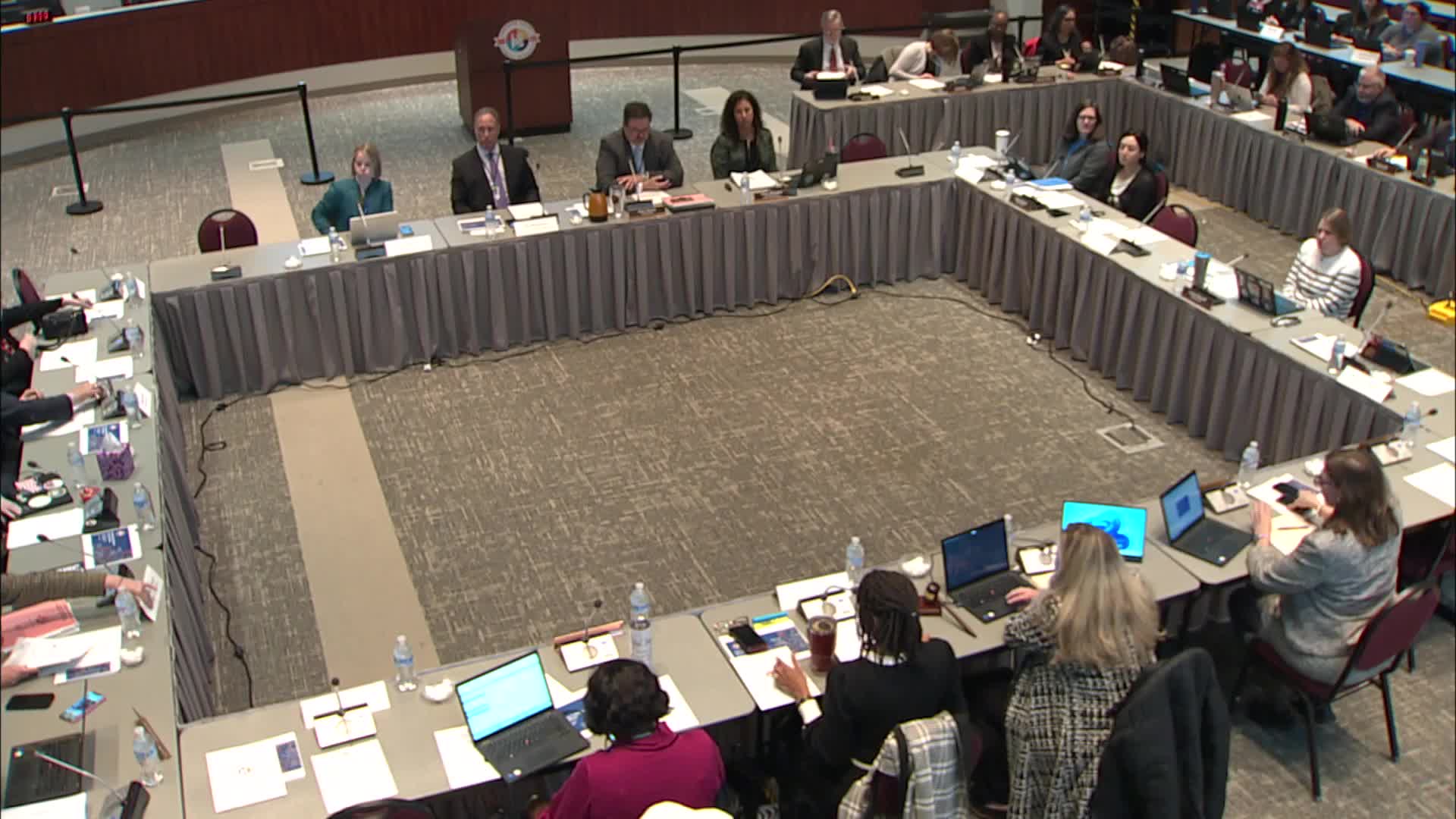
The Loudoun County School Board presented its adopted fiscal year 2026 operating budget to the Board of Supervisors on March 3, 2025, asking the county to transfer $123.4 million to fully fund the school division’s estimate of needs while noting new state budget adjustments that could reduce that request.
The Loudoun County School Board presented its adopted fiscal year 2026 operating budget to the Board of Supervisors on March 3, 2025, asking the county to transfer $123.4 million to fully fund the school division’s estimate of needs while noting new state budget adjustments that could reduce that request.
The presentation, delivered by Superintendent Dr. Spence, outlined an operating fund that includes 13,470.5 full‑time equivalent positions and a roughly $131.8 million increase—about 7.2%—over FY25. “The budget presented tonight is generally based on the second method,” Dr. Spence said, describing the approach of balancing strategic priorities with anticipated federal, state and local revenues.
Why it matters: Personnel costs account for the vast majority of the increase. The division says $120.4 million of the increase is for personnel (including compensation and benefits), and that approximately 94% of new or existing FTEs are school‑facing. School leaders told supervisors the combination of step increases, a proposed 4% cost‑of‑living adjustment (COLA) on universal and auxiliary salary scales, and enrollment shifts in higher‑cost student cohorts (special education and English learners) are the primary budget pressures.
Major figures and drivers
- Total operating FTEs: 13,470.5 (the presentation noted 13,060.1 as the FY25 base). - Adopted FY26 operating budget increase: $131.8 million (7.2%). - County transfer requested to fully fund estimate of needs (as adopted): $123.4 million (9.7% above FY25 county transfer). - Projected FY26 enrollment used for staffing: 81,629 students (a downward revision of 1,409 from last year’s projection; an increase of 372 from this year’s actual headcount). - Cost examples provided by staff: an annual step increase costs roughly $26 million; each 1% COLA costs about $14 million.
Compensation, health care and bonuses
The FY26 estimate places heavy weight on compensation: Dr. Spence described an average 6.5% increase in total pay for eligible full‑time employees when step increases, COLAs and other adjustments are combined. The budget includes a 12% increase in health insurance premiums for employees and a corresponding 12% increase in the employer contribution to stabilize the self‑insurance fund.
The presentation also addressed recently proposed state actions: the governor’s and General Assembly budget language includes one‑time fiscal‑year‑25 funding that could supply $8.7 million for bonuses and changes that would add $12.7 million (support cap elimination) plus $2.4 million (special‑education add‑on) in FY26. LCPS staff said the $8.7 million would not fully cover a $1,000 bonus for all employees under Loudoun’s staffing and pay practices; LCPS estimated it would need to retain an additional $5.6 million of the new state funding to provide bonuses to all full‑time employees, producing a net projected reduction to the county transfer request of $9.5 million if the state funding is enacted as proposed.
Enrollment and student needs
School officials stressed changing student needs as a driver of cost. Dr. Spence said the English‑learner population is projected to grow 2.8% and special‑education enrollment by 5.2%. The FY26 budget adds 282.6 positions focused on specialized programs for students with greater needs; those new positions represent roughly 75% of total new FTEs included in the request.
Program and capital priorities
The budget includes investments the board labeled school‑facing: expansion of dual‑language immersion into second grade, resources for the Access Academy and the Academy of Global and Linguistic Studies, an expansion of IB authorization to Parkview High School, funding to launch a recovery school for students recovering from substance use disorder, and a five‑school after‑school pilot. The division also budgeted staffing to support rollout of a new enterprise resource planning (ERP) system.
Safety and other initiatives
LCPS included safety and security investments recommended by a prior blue‑ribbon panel: body‑worn “panic” badge buttons for school‑based staff, camera analytics software and additional safety personnel. Staff described the panic devices as badge‑based with a required sequence of pushes to reduce false activations.
Questions and follow-ups from supervisors
Supervisors pressed staff on several topics during the joint meeting, asking for: details on how the $1,000 bonus would be applied across filled positions and the total cost including taxes and fringe; a breakdown of federal grant amounts and risk if federal grants were reduced; clarification of employee premium share changes; and specifics on projects in the capital asset preservation list. LCPS staff offered to provide many of the requested details in written follow‑ups.
Funding process and next steps
Dr. Spence said the school board adopted its estimate of needs and transmitted it to the Board of Supervisors; the county will consider the request as it finalizes its budget. Because the General Assembly’s final actions (and the governor’s decisions) could change state funding, LCPS said it will continue to monitor Richmond and may seek a supplemental appropriation to recognize one‑time state funds if they are enacted.
No formal vote on the county transfer or changes to the FY26 request occurred at the March 3 meeting; the presentation was an opportunity for supervisors to ask questions prior to the supervisors’ budget deliberations. LCPS staff promised additional written information on bonus cost calculations, grant‑funding details and other items supervisors raised.
Ending
The presenters closed by emphasizing that the FY26 request prioritizes staff and school‑facing positions and that the division will update the supervisors as state budget decisions are finalized. “We will keep monitoring the state budget and promptly provide updates,” Dr. Spence said.