Get Full Government Meeting Transcripts, Videos, & Alerts Forever!
Get email alerts on the Vendor Collection Allowance topic
No spam. Unsubscribe anytime.
Senators hear proposal to let retailers keep a percentage of sales tax to offset collection costs
Summary
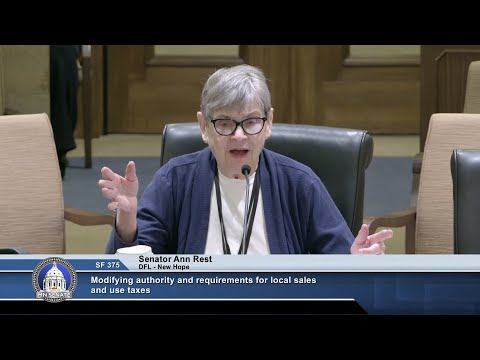
Senator Rest introduced Senate File 44 on Feb. 26, asking the Taxes Committee to consider a vendor collection allowance that would let retailers retain a small percentage of the sales tax they collect to offset the costs of collecting and remitting the tax.
Senator Rest introduced Senate File 44 on Feb. 26, asking the Taxes Committee to consider a vendor collection allowance that would let retailers retain a small percentage of the sales tax they collect to offset the costs of collecting and remitting the tax.
The bill would add a definition for "net liability," permit retailers to retain a percentage of sales tax in recognition of the administrative burden of collection, and scale the allowance based on levels of sales. It also would exclude taxes otherwise paid by a retailer from eligibility for the allowance, and it sets a calculation for the minimum remittance amount that a retailer must pay to claim the allowance.
Why it matters: Proponents said the allowance would recognize real costs borne by small businesses and would bring Minnesota in line with many other states. Opponents and fiscal analysts have warned the allowance could reduce state general fund receipts by tens of millions of dollars annually.
Sen. Rest described revenue estimates for the concept in varying terms during the hearing: at one point she said a calculation showed a potential cost to the state of almost $200 million; she later cited a projection of about $88 million in 2026 and nearly $100 million in 2027.
Small-business owners who testified told the committee that collecting and remitting sales taxes imposes measurable labor and fee costs.
Scott Farrell, identified as general manager of Down the Valley Record Stores, said his business has operated in Minnesota since 1972 and employs about 20 to 25 people. “The remittance process alone takes our bookkeeper nearly a half day each month,” Farrell told the committee. He said an audit requires a staff member to dedicate a week to fulfilling obligations and that the combined time and credit-card fees are a significant strain for a small employer.
Chan(n)ing Smith, owner of a neighborhood convenience store in Emmerich Grove Heights, said credit-card processing fees on fuel and other taxable items add up. “Each gallon of fuel purchased with a credit debit card at my store cost me about a penny,” Smith said, and estimated that on about 1 million gallons that cost him roughly $8,500 last year. Smith said his store collected $52,979 in taxable items other than fuel and paid nearly $1,600 in card fees to collect that money for the state.
Logan McKee, second-generation owner of Games by James, said almost 90% of his sales are credit-card transactions and that his business collected more than $400,000 in sales tax on credit-card transactions last year. He said bookkeeping and processing costs exceeded $10,000 for his operations across six locations.
Supporters urged the committee to consider the bill as a measure to help small retailers remain competitive with larger firms and with out-of-state sellers who do not face the same local collection burdens.
The committee did not vote on the bill. The record shows Senate File 44 was laid over for possible inclusion.
Ending: Senate File 44 will remain under consideration; Senator Rest said she intends to continue revising the proposal and to bring it back for further committee action as revenue estimates and legislative timing allow.