Get Full Government Meeting Transcripts, Videos, & Alerts Forever!
Get email alerts on the Academic Acceleration topic
No spam. Unsubscribe anytime.
Committee advances pilot to automatically place eligible students in rigorous courses; debate over teacher recruitment language
Summary
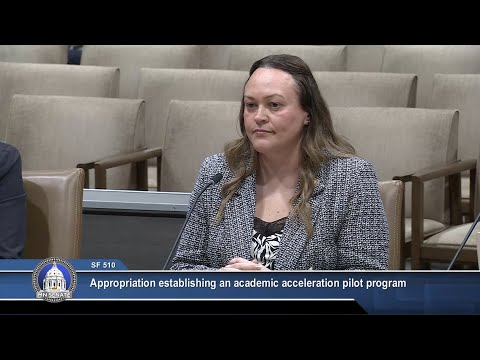
Senate File 510 would create a pilot to automatically enroll eligible students in AP, PSEO concurrent‑enrollment, or IB coursework and provide grant funding for supports; the committee adopted a delete‑all amendment that defines the pilot.
The Senate Education Finance Committee on Feb. 26 considered Senate File 510, which would create an academic acceleration pilot to increase access to rigorous coursework by automatically enrolling students who meet evidence‑based eligibility criteria into Advanced Placement (AP), PSEO concurrent enrollment, or International Baccalaureate (IB) courses.
Senator Mann and co‑author Senator Gustafson said the pilot would address persistent gaps in access for students of color, low‑income students, students with disabilities and English learners. “Automatic enrollment adds an additional pathway for students without getting rid of those recommendations,” said Matt Shaver, senior policy director at Allies, testifying in support. He said automatic enrollment ensures “if a student earns their spot, they get a spot.”
Student representatives from the Minnesota Youth Council described personal experience with PSEO and advanced coursework and urged the committee to expand opportunities to students who are overlooked under subjective recommendation systems.
The A2 amendment, a delete‑all that lays out the pilot’s structure, was presented and adopted by the committee. As amended, the pilot would run during the 2026–2029 school years in up to six districts or charter schools; the bill defines “rigorous coursework” to include AP, PSEO concurrent enrollment, and IB, requires automatic‑enrollment policies with parent opt‑out, and authorizes grants to participating schools for teacher training, textbooks, tutoring, administrative expenses and limited performance bonuses. Committee testimony noted the Department of Education suggested reducing a proposed teacher performance‑bonus cap from 15% to 5% in the amendment language.
The hearing included expert testimony on national evidence for universal screening and automatic placement. Dr. Megan Austin of the American Institutes for Research summarized an ongoing Washington state study that found automatic enrollment increased advanced‑course participation without depressing student GPA or graduation rates; other witnesses described positive results from districts and states that have implemented similar policies.
A policy dispute surfaced over language that would “prioritize recruiting teachers of color” for participating schools. Senator Lucero offered an oral amendment to strike the words “of color” from two lines in the amendment; the oral amendment failed on a roll‑call vote (5 yes, 7 no). Legislators debated whether the prioritization would conflict with the Minnesota Human Rights Act; proponents said the language is an effort to remedy workforce representation gaps, while opponents raised statutory and constitutional concerns.
The A2 amendment was adopted; the transcript does not record a final committee vote on Senate File 510 itself during this hearing. Committee discussion emphasized that the pilot is both about automatic enrollment and about expanding rigorous coursework access in districts that cannot currently offer such classes.
Votes and formal actions affecting the bill and amendment are summarized below.