
Committee hears bipartisan plan to streamline mental-health regulations and expand workforce pathways
Get AI-powered insights, summaries, and transcripts
Sign Up Free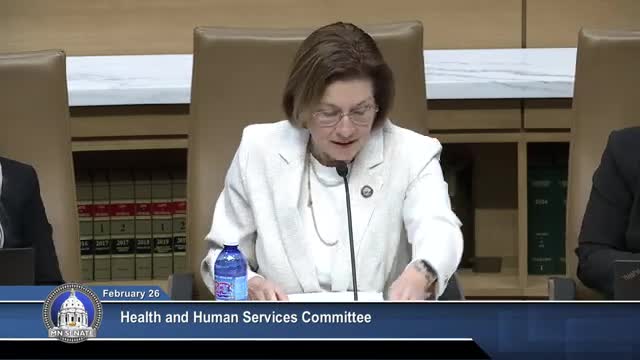
Summary
Senate File 477 would update state mental-health statutes to reduce regulatory burdens, expand supervision pathways and create workforce pipelines; proponents described the bill as policy-only and requested a fiscal note to confirm there are no costs.
Senator Bolden outlined Senate File 477 as a package of statutory changes aimed at removing regulatory barriers that providers say divert staff time from direct care and hinder recruitment into the mental-health workforce.
The sponsor described the bill as the product of months of stakeholder work with the Department of Human Services and said proponents intend the bill to be policy-only and without new cost. “The intent for this bill is to be policy only with no cost,” Senator Bolden said; proponents added that any provision flagged by DHS as carrying a cost would be addressed.
Witnesses described elements intended to expand pathways into the workforce, reduce duplicative paperwork and clarify statutes that currently overlap with 245I (the state’s behavioral health licensing chapter). Ellie Skelton, executive director of Touchstone Mental Health and president of the Minnesota Providers Association, described proposed changes to supervision requirements that would allow case-management associates to move into target case management with a less-burdensome weekly supervision approach. “If we can have case management associates work for a couple years, learn, and be able to get into the target case management field…we’re moving that to clinical supervision per month,” she said.
Ashley Chose, CEO of Woodland Centers, emphasized how burdensome state regulations make integrated care delivery difficult in rural areas and supported modifications to ACT team lead requirements and supervision rules to ease recruitment for community-based teams. “Recruiting professionals, especially for rural ACT teams, is very challenging, and these changes would provide a much needed flexibility while maintaining the service quality that’s very important,” Chose told the committee.
Committee members broadly praised efforts to reduce paperwork and strengthen workforce pipelines. Senator Abler called the bill the sort of change that can increase operational efficiency without additional funding. DHS staff and proponents continue to work on technical language; the committee requested a fiscal note to verify the bill’s “no-cost” intent. The committee laid Senate File 477 over as amended for further consideration.
Ending: The measure represents a stakeholder-driven, incremental approach to expanding workforce capacity and reducing regulatory friction for providers; DHS will complete a fiscal review and proponents plan further technical collaboration.