
Bureau of Mediation Services outlines caseload, training and POGAR updates to committee
Get AI-powered insights, summaries, and transcripts
Sign Up Free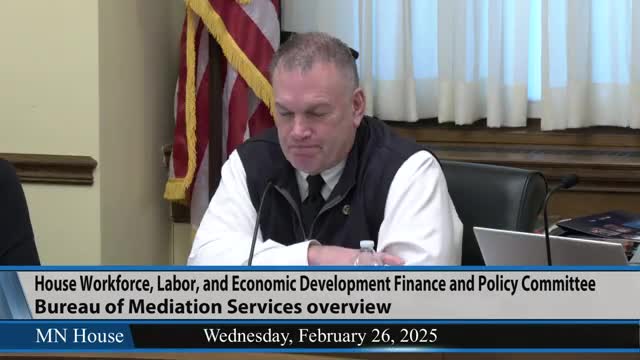
Summary
The Bureau of Mediation Services updated lawmakers on mediation and arbitration caseloads, training initiatives, and technology improvements; the agency plans case management upgrades and new arbitrator training for peace officer grievance panel members.
The committee received an overview of the Bureau of Mediation Services (BMS), its caseload and recent initiatives from Commissioner Johnny Villarreal.
Villarreal said BMS — the neutral state agency that administers mediation, arbitration and representation services in the public sector — processed roughly 349 mediation cases in FY 2023 and about 367 in FY 2024. He said grievance mediation resolves more than 80% of the cases in which both parties agree to mediate and the agency typically settles over 90% of contract mediations before they reach a strike or arbitration timeline.
The bureau described staffing and training priorities: BMS has six mediators and recently hired the agency's first general counsel; about 75% of staff have five years or less of service following retirements, and the agency has invested in professional development and continuing legal education. BMS said it is rolling out a new training collaboration with the Federal Mediation and Conciliation Service called Path Forward Discussions, intended to improve communications at the bargaining table and reduce contentious bargaining dynamics.
Villarreal also addressed arbitration and the Peace Officer Grievance Arbitration Roster (POGAR). POGAR arbitrators are selected by statutory rotation to hear peace officer grievances; the law now requires specific training for POGAR arbitrators and BMS worked with Hennepin Technical College to develop a two‑day curriculum covering law enforcement and cultural competency topics. The POGAR panel consists of six arbitrators; POGAR arbitrators were assigned 13 cases across FY 2023–24.
The bureau noted representation work including unit determinations and clarifications (the agency processed more than 100 unit‑determination and related matters in the two most recent fiscal years) and said it will post a public comment period as part of a rulemaking process addressing several statutory changes enacted last session.
BMS said it will use Odyssey funds to upgrade its case management system to produce better data reports and improve stakeholder experience. The commissioner closed by noting monthly open "Coffee with the Commissioner" sessions and offered to coordinate with the committee and other agencies as needed.
Why it matters: BMS is the state agency that helps public employers and employee organizations resolve bargaining and grievance disputes; updates to arbitrator training, technology and mediation tools affect labor relations across Minnesota's public sector.
Ending: Committee members praised BMS's role and asked about coordination with the Public Employment Relations Board; Villarreal said PERB is a separate agency that administratively falls under the same budget chapter but operates independently and handles unfair‑labor‑practice adjudications.