Get Full Government Meeting Transcripts, Videos, & Alerts Forever!
Get email alerts on the Foreign Adversary Land Restrictions topic
No spam. Unsubscribe anytime.
Bankers tell House panel HB315 risks restricting farm lending; cite overlap with FinCEN checks
Summary
Representative Scott Sharp introduced House Bill 315 to limit land purchases by foreign adversaries. Tim Shank of the Kentucky Bankers Association testified the bill’s foreclosure mechanics and reliance on a 22 CFR list could conflict with banks’ FinCEN screening and limit access to credit for farmers.
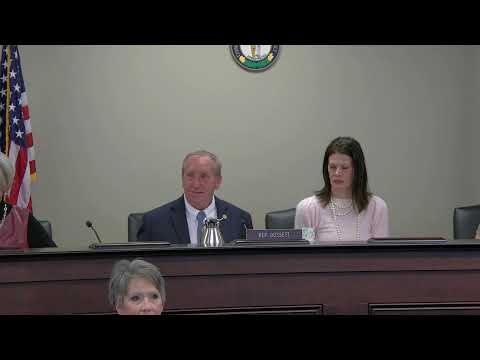
Representative Scott Sharp introduced House Bill 315 to the House Agriculture Committee on Wednesday, a bill the sponsor described as intended to limit land purchases by designated foreign adversaries.
Scott Sharp, identified as the bill's presenter, described HB 315 as a "foreign adversary land bill" aimed at minimizing the ability of listed foreign adversaries to purchase land in Kentucky. The committee had a motion to consider the bill by Representative Tate with a second by Representative Bivens.
Tim Shank, general counsel for the Kentucky Bankers Association, testified in opposition to the mechanics of a section of the bill that addresses foreclosure. Shank told the committee that banks already must screen borrowers against lists compiled and used by the U.S. Department of the Treasury and the Financial Crimes Enforcement Network (FinCEN), and that those lists are more exhaustive than the list the bill references in 22 C.F.R. He warned the bill’s mechanics could create compliance conflicts for banks and potentially limit access to credit for community borrowers, including farmers.
"Banks cannot make loans to these sort of foreign adversaries listed in here," Shank said in testimony describing existing federal screening obligations and the role of FinCEN. He urged the committee to consider the practical impacts on community banks that loan to farmers across the commonwealth.
Shank focused his comments on section 8 of the bill, which he said concerns foreclosure of property; he asked the committee to consider how those mechanics would interact with existing federal rules and bank compliance obligations. He said his opposition was limited to the bill’s mechanics rather than its stated purpose.
The committee proceeded to take questions and scheduled further consideration; the transcript includes Shank’s opposition testimony but does not include a committee vote on HB 315 in the provided excerpt.