Get Full Government Meeting Transcripts, Videos, & Alerts Forever!
Get email alerts on the Urban Youth Agriculture topic
No spam. Unsubscribe anytime.
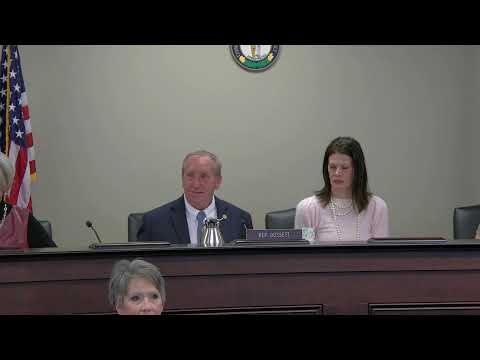
House Agriculture Committee passes pilot for Kentucky Urban Youth Agriculture Initiative
Summary
The committee approved House Bill 356, establishing a pilot Kentucky Urban Youth Agriculture Initiative to expand 4‑H and Cooperative Extension programming for urban youth, with changes including a lower minimum age, broader agribusiness content and removal of a farmland-access requirement.
The Kentucky House Agriculture Committee on Wednesday approved House Bill 356 as amended by the committee sub, creating a pilot Kentucky Urban Youth Agriculture Initiative aimed at expanding agricultural education for urban youth.
The initiative, sponsored by Representative Neema Kulkarni, would broaden an earlier proposal focused on urban farming to include agribusiness, agricultural advocacy and best practices for efficient land use, lower the minimum participant age from 6 to 5, remove a requirement that participants have access to farmland, and add structured internships and apprenticeships.
Representative Neema Kulkarni, sponsor of the bill, told the committee the committee-substitute strengthens educational opportunities while keeping the core mission of engaging urban youth in agriculture. "Thanks to Chairman Dossett's guidance and productive discussions with the Cooperative Extension at UK and 4‑H specifically, the revised version essentially strengthens the educational opportunities that are going to be provided under this legislation," Kulkarni said.
Delaney Cook, introduced as a Harrison County 4‑H member, described 4‑H as the reason she discovered her interests and said the program helped her develop public speaking and entrepreneurship skills. "4‑H has given me the opportunity to take on many roles," Cook said. Mike Meyer, identified as Associate 4‑H Kentucky program leader, told the committee Kentucky reached more than 202,000 youth in 2024 and said the goal is to expand access to urban areas.
Committee members who spoke in favor cited 4‑H’s statewide reach and the need to expose urban students to agricultural careers and leadership training. Representative McPherson, who said she previously chaired a county extension council, called the program a way to broaden understanding of agriculture beyond traditional production. Representative Watkins asked whether community gardens or small urban plots would qualify under the bill; Kulkarni and Meyer said the sub removed minimum-acreage requirements so programs could operate in limited‑land urban settings.
The committee voted to pass HB 356 as amended by the committee sub; a separate title amendment also passed. Representative Donworth made the motion to adopt the committee substitute and Representative Hart seconded the motion. The transcript records an affirmative roll call and the chairman declared the bill passed by the committee. Funding sources and exact pilot sites are not specified in the bill text; the sponsor said Cooperative Extension will set pilot parameters and Meyer listed populous counties the extension would prioritize for pilots, including Fayette, Kenton, Campbell, Boone, Hardin and Jefferson.
The initiative as amended emphasizes education, workforce development and broader agribusiness exposure rather than mandating access to farmland. The bill now establishes a pilot implementation timeline and expands participation and program types, according to the sponsor and Cooperative Extension testimony.
A title amendment to the bill also passed on a subsequent voice vote. The committee concluded consideration of HB 356 and thanked sponsor Kulkarni and the young 4‑H guests who were present.