Get Full Government Meeting Transcripts, Videos, & Alerts Forever!
Get email alerts on the School Discipline Restorative Practices topic
No spam. Unsubscribe anytime.
House advances restorative‑practices measure after extended Q&A on classroom safety and implementation
Summary
The House debated House Bill 197, a bill to enable restorative‑practices programs in public schools. Lawmakers discussed the bill's goals, evidence, and limits; the chamber adopted a favorable report as amended and ordered the bill printed for third reading.
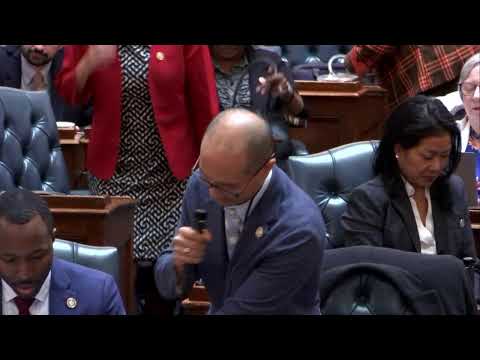
ANNAPOLIS, Md. — Lawmakers on Feb. 20 spent extended floor time discussing House Bill 197, a measure to encourage restorative practices in Maryland public schools, focusing on how the approach would be implemented and how it would affect classroom safety and disciplinary disparities.
The clerk read that House Bill 197 — described on the floor as relating to restorative practices in public schools — received a favorable report as amended. Members questioned the specifics of restorative practices, how they differ from disciplinary procedures, and whether the bill would apply to violent or reportable offenses. After debate and clarification from lawmakers identified as the committee chair and other members, the bill was ordered printed for third reading.
Supporters described restorative practices as interventions designed to keep students in school through mediation, family engagement and counseling, rather than suspension or expulsion for many infractions. The committee chair said, “It changes the school culture. ... children feel better about being in school, test scores rise,” and said research shows reductions in disciplinary disparities for protected groups when restorative approaches are used.
Questioners pressed for detail on scope and limits. One delegate asked how the bill would treat students who are violent or who commit offenses that would normally be handled under reportable‑offense statutes. The committee chair and other speakers clarified that the bill targets disciplinary responses such as suspensions and expulsions and is not intended to supplant statutory processes for reportable criminal behavior. A member summed up concerns about teacher safety and retention: restorative approaches should not be applied where they would keep violent students in general classrooms without appropriate supports.
Speakers cited data during the exchange: the committee chair said nearly 70,000 students were suspended or expelled in Maryland last year, and referenced national examples where restorative programs substantially reduced suspensions (one published case cited a reduction from 58,000 to 13,000 suspensions in a school district that adopted such practices). Several delegates stressed that the bill is enabling — schools may adopt restorative models that fit their context but are not mandated statewide.
Debate concluded with members noting the bill’s intent to reduce persistent disciplinary gaps affecting students of color and students with disabilities, while other members warned against one‑size‑fits‑all approaches and urged careful safeguards for staff and students.
The transcript records that the bill received a favorable report as amended and was ordered printed for third reading. Further amendments and debate are possible at third reading.