Get Full Government Meeting Transcripts, Videos, & Alerts Forever!
Get email alerts on the Property Assessments Aerial Imagery Drones topic
No spam. Unsubscribe anytime.
House rejects amendment requiring on‑site inspections for drone‑based property assessments
Summary
The Maryland House of Delegates declined an amendment that would have required physical inspections for property assessments that use oblique aerial imagery, after floor debate on workload and potential tax impacts. The amendment failed and the bill was ordered printed for third reading.
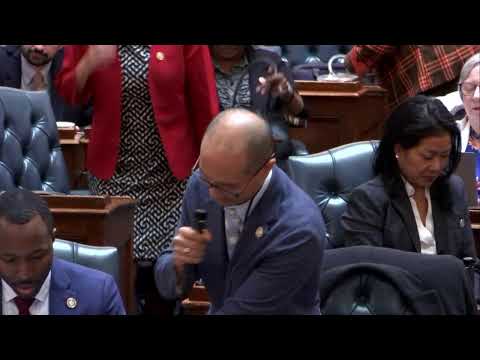
ANNAPOLIS, Md. — The Maryland House of Delegates on Feb. 20 considered, then rejected, an amendment that would have given property owners the right to a physical, on‑site inspection when their assessment relied on oblique aerial imagery or drone footage.
The amendment — presented by a delegate identified on the floor as the Delegate from Anne Arundel County — would have required the State Department of Assessments and Taxation (SDAT) to offer a physical inspection as part of the assessment/appeals process. The House voted that the amendment fails; the bill was ordered printed for third reading.
Supporters of the amendment told the House they were seeking fairness for homeowners, particularly older residents on fixed incomes, who have seen large assessment increases in counties that piloted aerial imagery. The Delegate from Anne Arundel County said, “This simple amendment just gives the taxpayer the right to have a physical inspection.” The speaker cited concerns that recent assessment increases — in some cases described on the floor as rising by 20%–40% in individual cases — could strain households’ ability to pay mortgage, escrow and utility costs.
Opponents, led in debate by the House floor leader, said implementing a requirement for on‑site inspections would overhaul the state’s assessment and appeals processes. The floor leader told the chamber the state already offers multiple free appeal pathways — an internal supervisory review at SDAT, a third‑party review before a property assessment appeals board (PTAB), and the Maryland State Tax Court — and said the amendment would create two different appeals tracks and additional notification burdens for SDAT. He noted that several counties have used oblique aerial imagery for years and cited studies and pilot results that, according to him, show aerial imagery to be more accurate. The floor leader also said about 24,000 appeals were filed statewide last year and that SDAT has roughly 400 staff, arguing that a statewide requirement for on‑site visits would be infeasible.
Speakers also referenced the bill’s fiscal note. One member read the fiscal note-to-the-body, saying the department estimated the statewide assessable real property base could increase by approximately $1,250,000,000 based on pilot results in Frederick and Anne Arundel counties; opponents described that figure as a hidden tax increase. Supporters countered that those prospective increases are exactly the reason taxpayers deserve an on‑site review option.
The bill’s proponents noted that the pilot programs in Frederick and Anne Arundel counties have used aerial imagery for several years and that multiple jurisdictions fund the method locally. Opponents stressed that mandating on‑site inspections would slow the process, require major SDAT restructuring and potentially create unequal treatment of property owners.
Following roll call, the amendment failed and the House directed the bill to be printed for third reading.
Votes and formal actions recorded in the transcript: the floor considered amendment number 993225 (to require a physical inspection) and the amendment failed on a roll call; the bill was ordered printed for third reading. The transcript did not record a final roll‑call tally for the amendment in the cited excerpt.